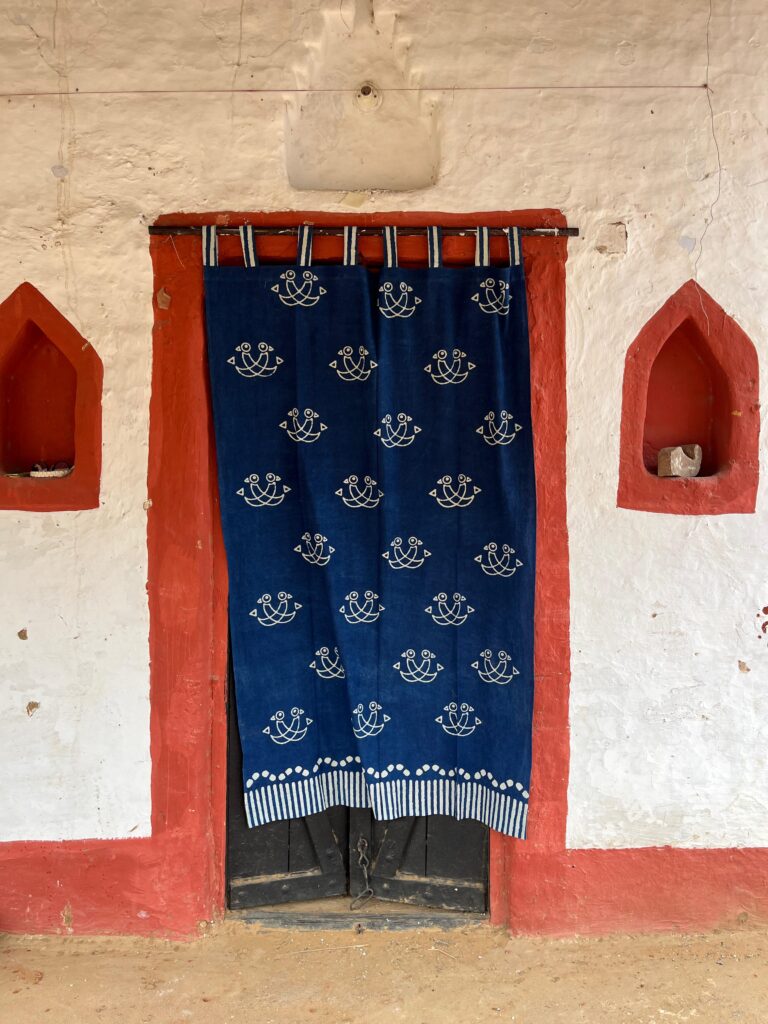
If you’ve ever run your hand over a piece of fabric with soft, earthy patterns and wondered how something so beautiful could come from something as simple as mud — you’re not alone. The dabu printing process is one of the oldest and strangest-sounding textile techniques in India, and once you see it up close, you’ll never look at a block-printed scarf the same way again.
At Anaprinta, our workshops in Bagru, Jaipur, exist for exactly this reason — to let people watch, touch, and actually do what generations of artisans have done by hand for centuries. In this blog, we’re walking you through the entire dabu printing process, from raw fabric to finished cloth, so you know exactly what happens before a piece of Bagru hand block printing ever reaches your hands — or before you try it yourself.
What Is Dabu Printing?
Dabu printing is a resist-printing technique that uses mud, not wax or chemicals, to block dye from certain parts of the fabric. The word “dabu” comes from the Hindi word dabana, meaning “to press” — because the mud paste is literally pressed onto the cloth using hand-carved wooden blocks.
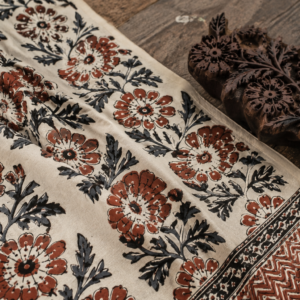
Unlike regular block printing, where color goes directly onto the fabric, dabu block printing works in reverse. The mud paste protects (or “resists”) certain areas from the dye, so when the fabric is dipped in a dye bath, those covered areas stay untouched. Once the mud is washed away, the original fabric color peeks through in beautiful, organic patterns — no two pieces ever turning out exactly alike.
It’s slow. It’s messy. And it’s one of the most satisfying things you’ll ever watch — or try.
A Short History of Bagru Printing
To understand dabu, you first need to understand Bagru — a small town about 30 km from Jaipur that has been the beating heart of Bagru print for over 300 years. The Chippa community, whose name literally means “those who print,” settled here generations ago because of two things the land offered: clean river water and mineral-rich soil, both essential for natural dyeing and mud-resist work.
Walk through Bagru even today, and you’ll see fabric drying on rooftops, artisans working in open courtyards, and the same wooden blocks — some passed down through three or four generations — still being used exactly as they were decades ago. This isn’t a revived craft or a tourist reenactment. It’s a living tradition, practiced daily by families who’ve never known another trade.
This is also what makes Bagru hand block printing so different from mass-produced prints you find in stores — every mark, every slightly imperfect line, is proof that a human hand made it.
The Dabu Printing Process, Step by Step
Here’s where it gets interesting. The entire dabu printing process takes several days from start to finish, and every single step is done by hand. Let’s break it down.
Step 1: Preparing the Fabric
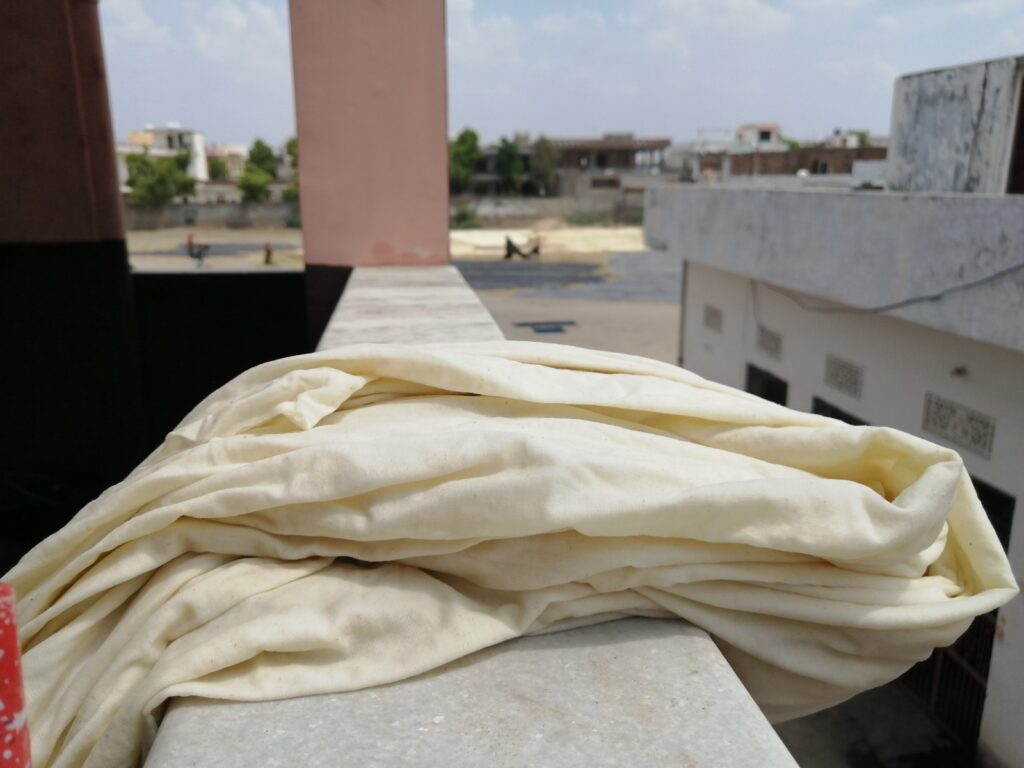
Before any printing begins, the raw cotton fabric is washed thoroughly to remove starch, oils, and impurities. This step, called desizing, ensures the fabric absorbs dye evenly later on. The cloth is then left to dry completely under the sun — a theme you’ll notice throughout this entire process.
Step 2: Carving and Choosing the Blocks
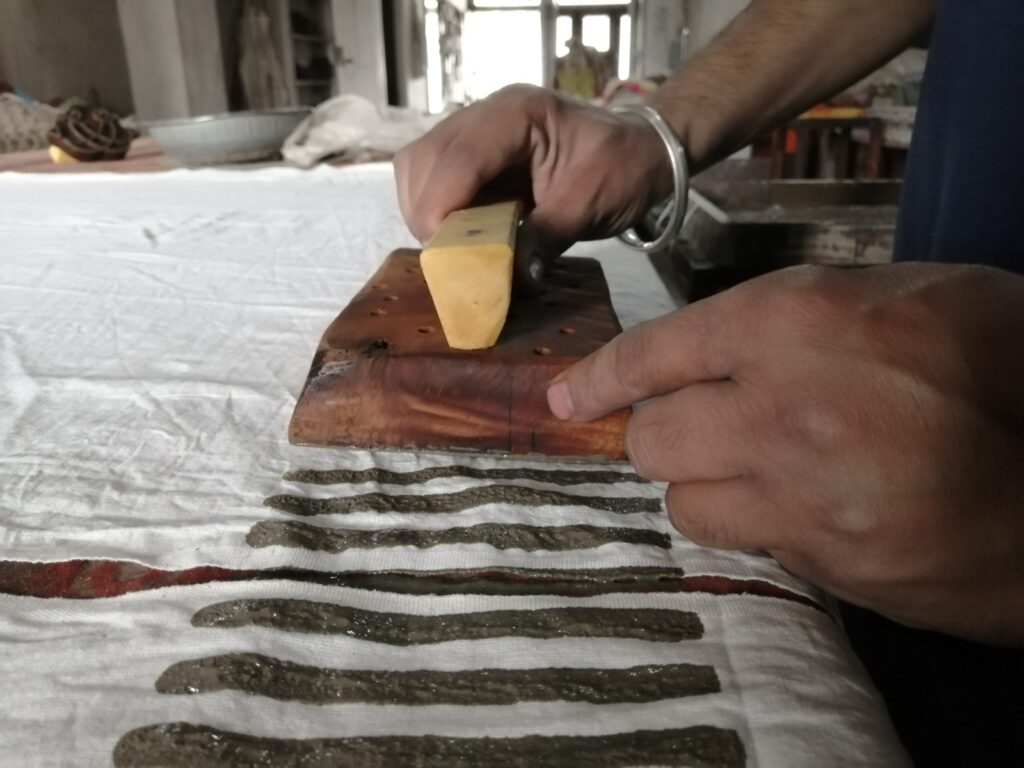
Each pattern begins as a hand-carved wooden block, traditionally made from seasoned teakwood. Master carvers spend days — sometimes weeks — chiselling out a single design. Artisans choose blocks based on the motif they want: florals, paisleys, geometric borders, or traditional Bagru patterns passed down for generations.
Step 3: Making the Dabu Mud Paste
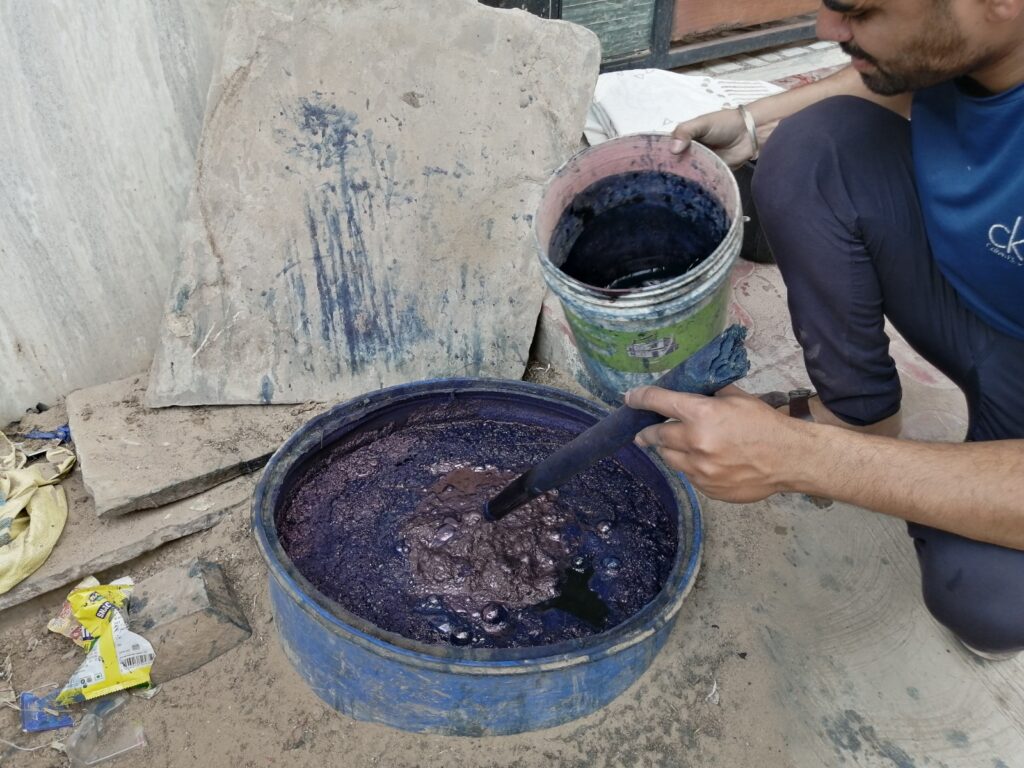
This is the heart of the technique. The dabu paste is made by mixing natural dye printing ingredients — black clay (locally sourced mud), gum, lime, and wheat husk — into a thick, smooth paste. Getting the consistency right takes years of experience. Too thin, and it won’t resist the dye properly; too thick, and it cracks and flakes off the fabric.
Step 4: Block Printing the Resist
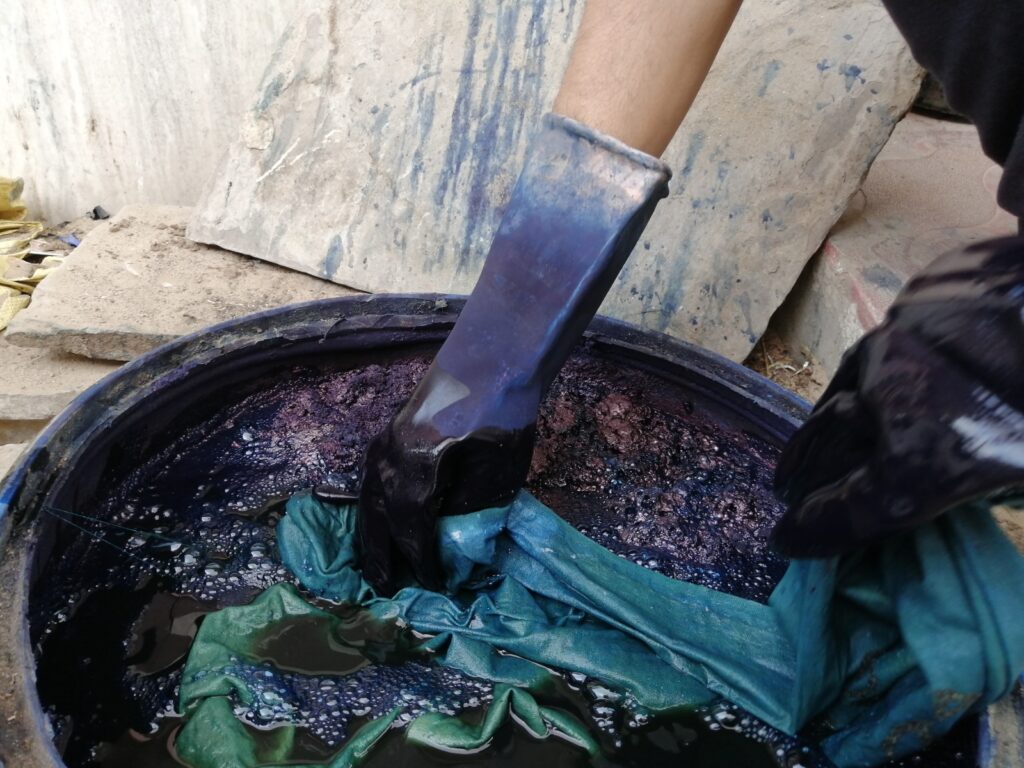
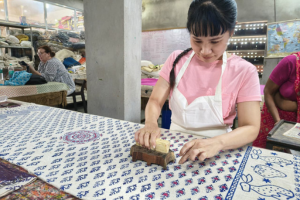
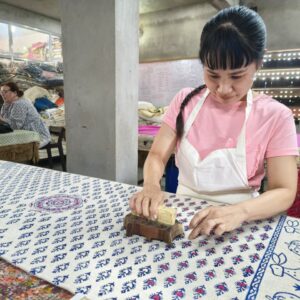
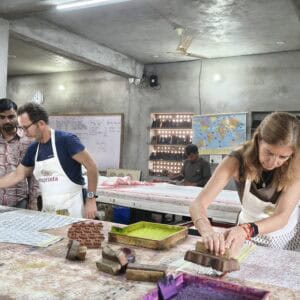
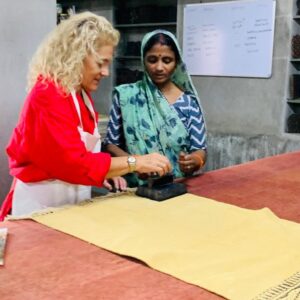
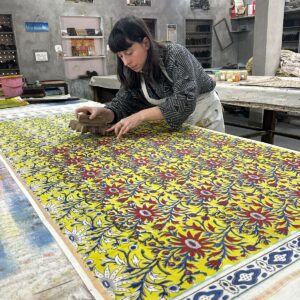
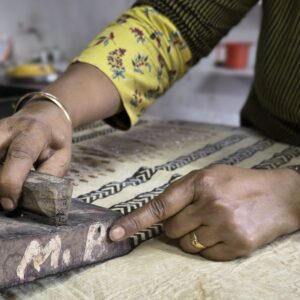
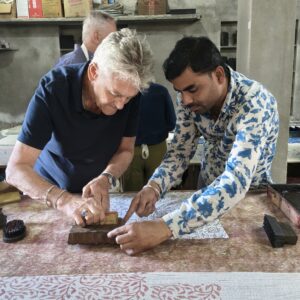
The carved wooden block is dipped into the mud paste and pressed firmly onto the fabric by hand. The artisan repeats this motion across the entire length of cloth, lining up each impression by eye — no machines, no guides, just years of muscle memory.
Step 5: Sprinkling Sawdust
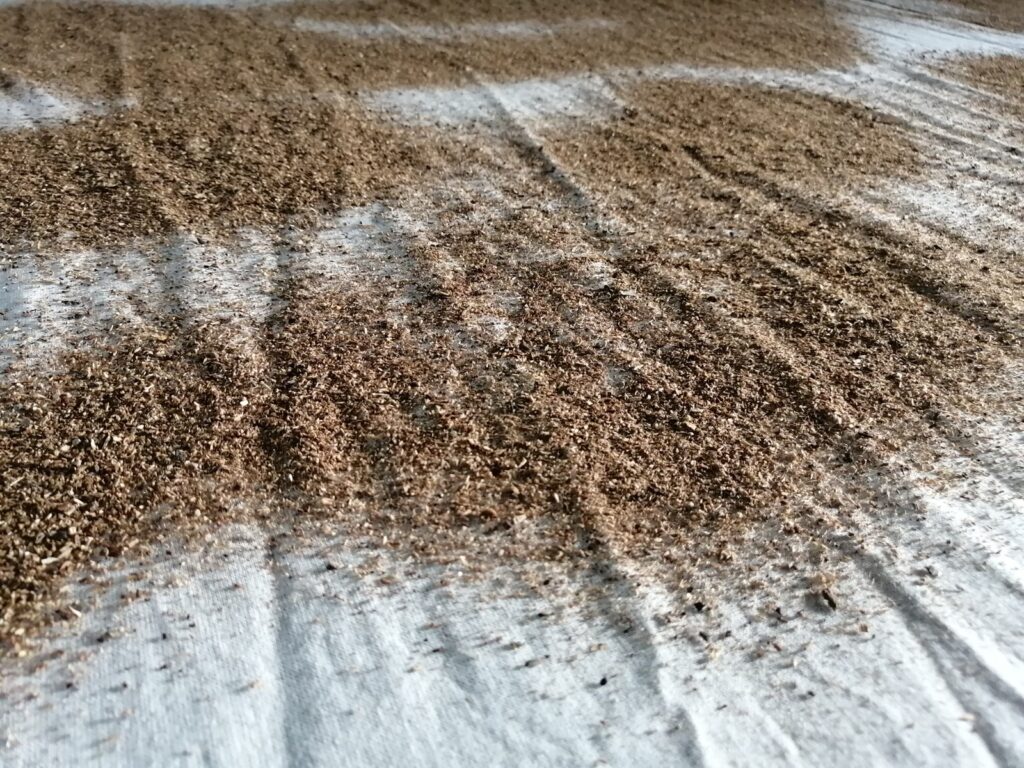
Immediately after printing, fine sawdust is sprinkled over the wet mud paste. This might look like a small detail, but it’s crucial — the sawdust keeps the paste from smudging and helps it hold its shape while drying.
Step 6: Dyeing in Natural Colors
Once the mud has dried completely, the fabric is dipped into a natural dye bath — often indigo for deep blues, or dyes derived from madder root, turmeric, and pomegranate rind for warmer earthy tones. Wherever the mud paste sits, the dye simply cannot reach the fibers underneath.
Step 7: Washing and Revealing the Pattern
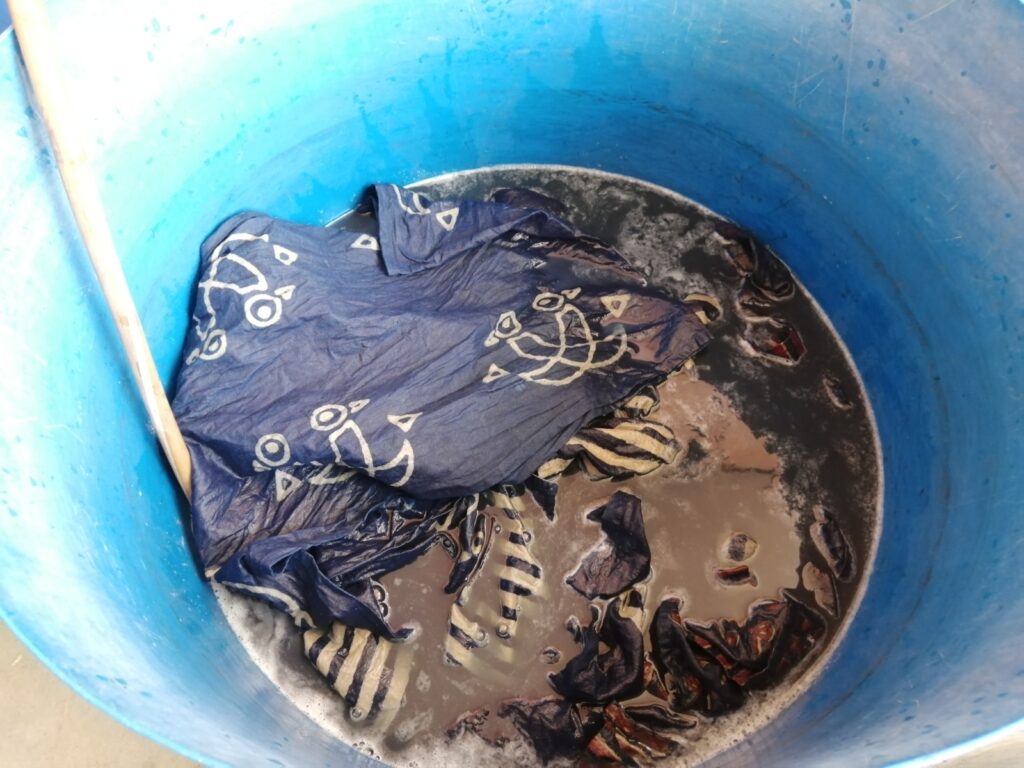
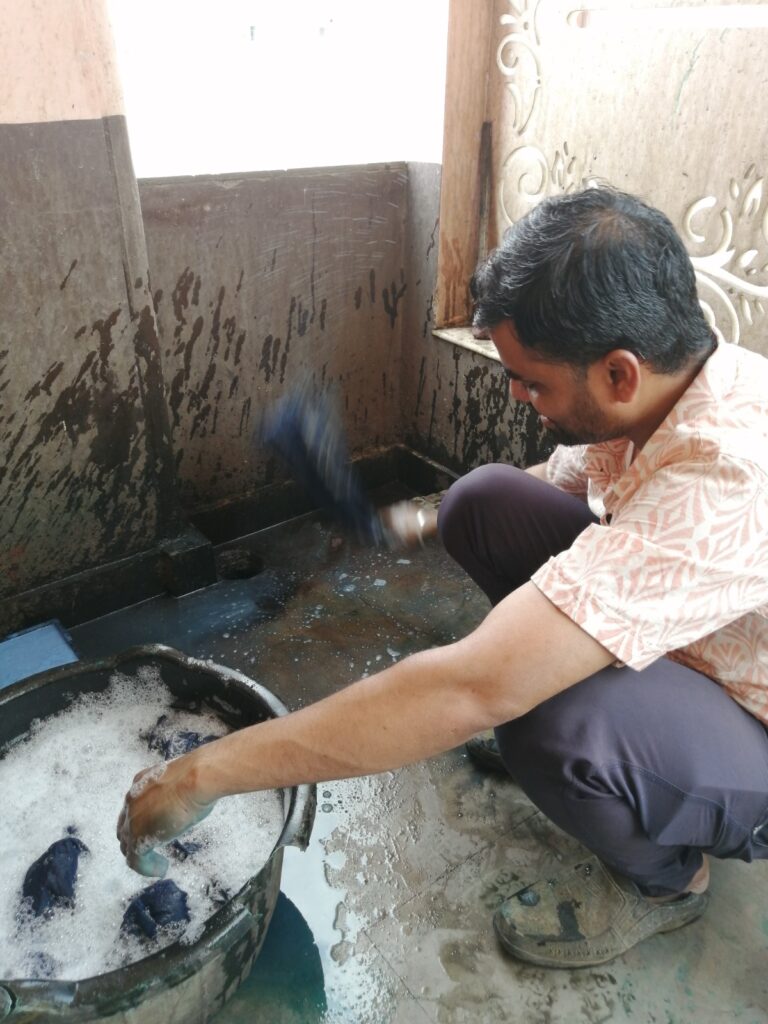
This is the most exciting part to watch. The dried, dyed fabric is taken to washing tanks, where it’s soaked and then beaten against stone slabs to loosen and remove the dried mud. As the paste washes away, the resisted pattern slowly reveals itself underneath — almost like uncovering a hidden design.
Step 8: Final Drying Under the Sun
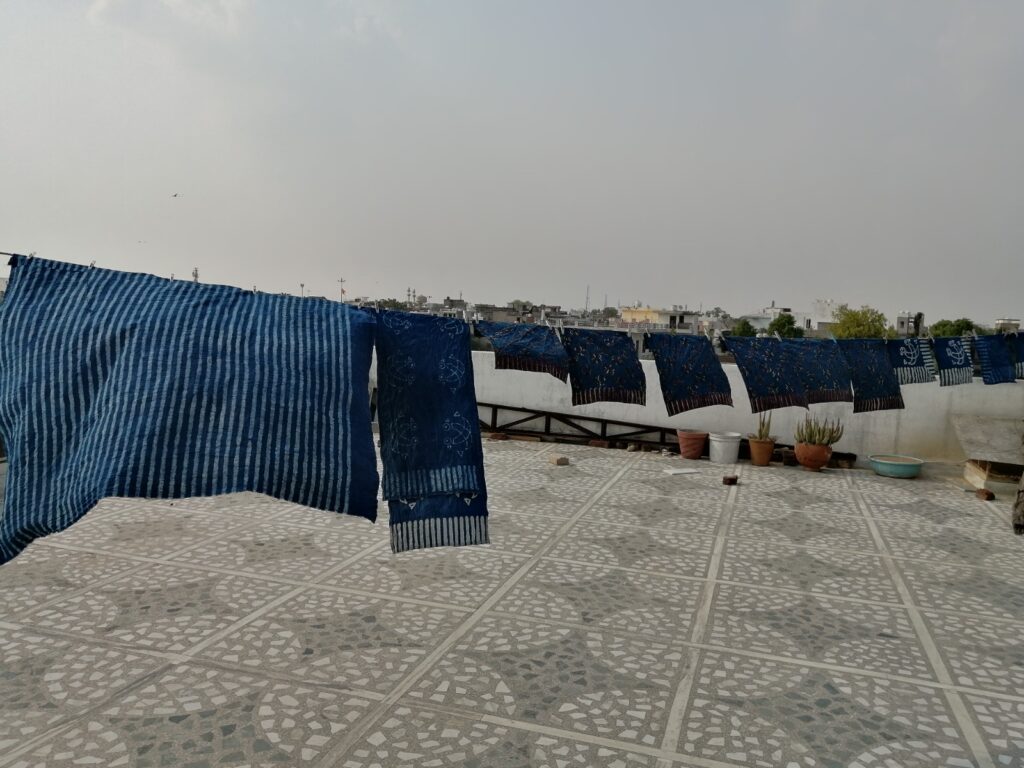
The finished fabric is laid out flat under open sky one final time, allowing it to dry naturally and set the colors. This sun-drying step is also what gives dabu-printed textiles their distinct, slightly weathered texture that machine-printed fabric simply cannot replicate.
From soaking the raw cloth to the final dry, a single length of dabu fabric can take anywhere from 3 to 7 days to complete, depending on the weather and the depth of color required.
Why Learn Dabu Printing at Anaprinta
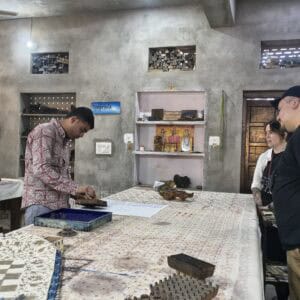
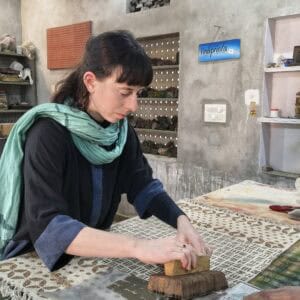
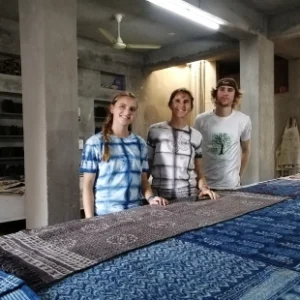
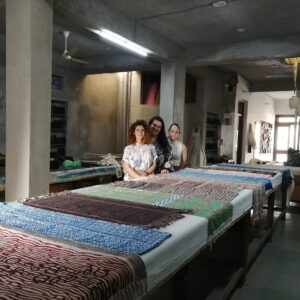
Reading about the process is one thing — but there’s nothing quite like getting your hands into the mud paste yourself. That’s exactly the experience we’ve built at Anaprinta, part of Fields of Color, our home base in Bagru.
Our dabu block printing workshop Bagru sessions are designed for complete beginners. You don’t need any prior art or craft background — just curiosity. Depending on how deep you want to go, we offer everything from a relaxed One-Day introduction to a more immersive Four-Day workshop where you’ll go from raw fabric to a finished, hand-printed piece you take home yourself.
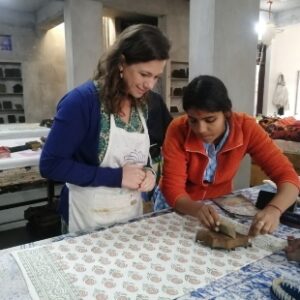
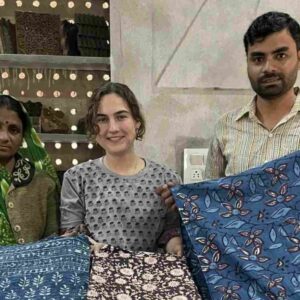
What makes our workshops different is that you’re not watching a demonstration — you’re working alongside real artisans, in the same courtyards where this craft has been practiced for generations, using the same wooden blocks and mud paste described above.
What a Workshop Day Looks Like at Anaprinta
Curious what an actual day looks like? Here’s a general idea:
- Morning welcome — You’ll arrive at our Bagru studio, meet the artisans, and get a short introduction to the tools and materials you’ll be using.
- Hands-on printing — You’ll choose a block design and start printing directly onto fabric under an artisan’s guidance, learning proper hand pressure and alignment.
- Understanding the mud paste — For our dabu-focused sessions, you’ll learn how the resist paste is prepared and applied.
- Natural dye bath — Depending on the workshop length, you may get to dip your own printed fabric into the dye bath and watch the color transform.
- Lunch and conversation — Most of our workshops include a traditional meal, giving you time to chat with the artisans about their craft and life in Bagru.
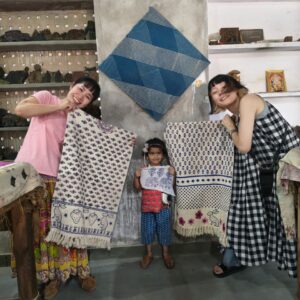
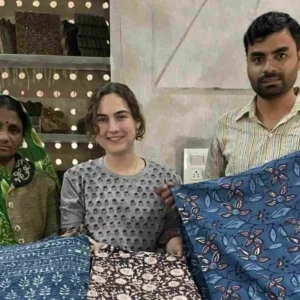
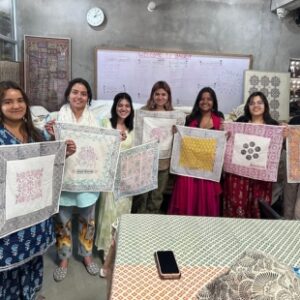
- Take your piece home — By the end of the session, you’ll walk away with something you made entirely with your own hands.
Tips for First-Timers
If this is your first time trying dabu printing, keep these in mind:
- Wear clothes you don’t mind getting a little dirty. Mud paste and natural dye can stain, and that’s part of the fun.
- Don’t aim for perfection. The charm of hand block printing lies in its slight imperfections — no two prints are ever identical, and that’s the point.
- Ask questions. Our artisans have decades of experience and genuinely enjoy sharing the stories behind each motif and technique.
- Book in advance, especially during Jaipur’s cooler months (October to March), when workshop slots fill up quickly.
- Carry a bag for your finished piece — you’ll want to take it home in one piece, literally.
Final Thoughts
The dabu printing process is proof that some of the most beautiful things are also the slowest to make. Mud, sun, water, and patience — that’s really all it takes to create a piece of fabric that no machine could ever replicate. And once you understand everything that goes into it, it’s hard not to appreciate every print a little more.
If you’re planning a trip to Jaipur and want to actually experience this craft rather than just read about it, we’d love to have you at Anaprinta. Come spend a day with us in Bagru, get your hands into the mud, and leave with a piece of fabric — and a story — that’s entirely your own.
Book your Dabu Block Printing Workshop with Anaprinta →
You can also follow our day-to-day workshop moments, artisan stories, and behind-the-scenes process on Instagram @anaprinta.
Frequently Asked Questions
1. What is the dabu printing process in simple terms? It’s a resist-printing technique where a mud paste is block-printed onto fabric to block dye from reaching certain areas. Once the fabric is dyed and washed, the mud-covered areas remain the original fabric color, creating the final pattern.
2. How long does it take to make one dabu-printed fabric? Depending on weather conditions and the depth of color needed, the full process — from washing the raw fabric to final drying — can take anywhere between 3 to 7 days.
3. Is dabu printing eco-friendly? Yes. Traditional dabu printing uses natural materials — clay, lime, gum, and plant-based dyes like indigo and madder root — making it a largely sustainable, chemical-free craft.
4. Do I need any prior experience to join a workshop? Not at all. Our workshops at Anaprinta are designed for complete beginners, and our artisans guide you through every step, from block selection to dyeing.
5. Where can I try a dabu block printing workshop near Jaipur? Anaprinta’s studio in Bagru — about 30 km from Jaipur — offers one-day and multi-day hands-on dabu block printing workshop Bagru experiences, including materials, guidance, and in most cases, a traditional meal.