Author name: anaprinta@gmail.com

Bagru Photography Tour: Capture the Colors, Crafts & Culture of Rajasthan
Uncategorized

Bagru Photography Tour: Capture the Colors, Crafts & Culture of Rajasthan

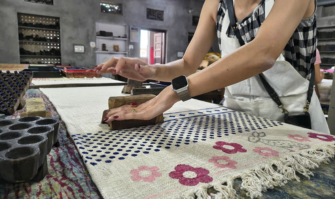
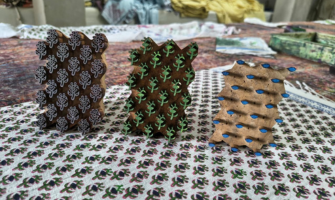
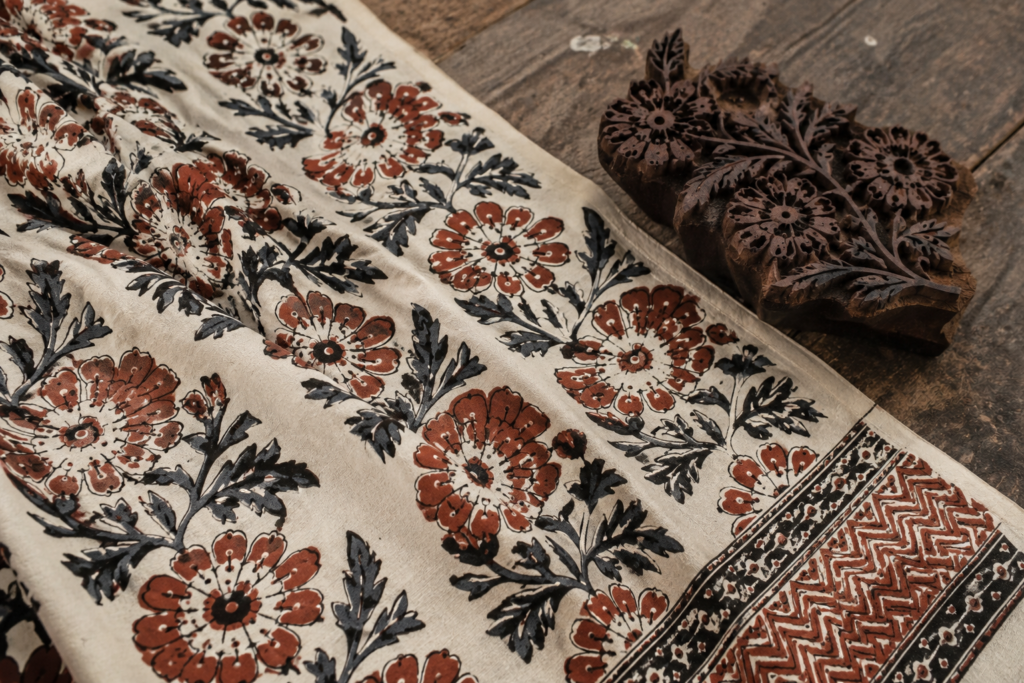
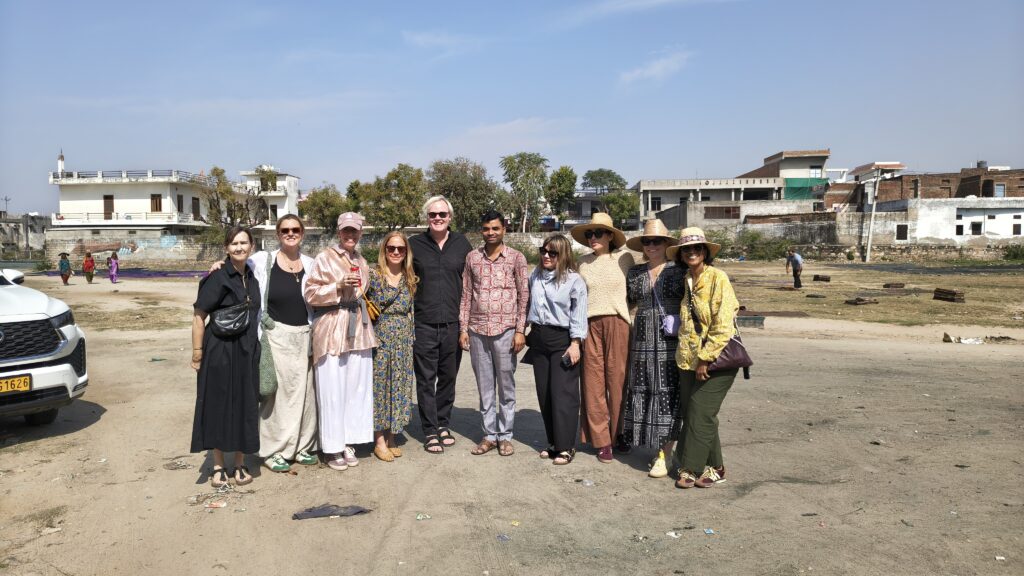
The Bagru Photography Tour — officially run as the Bagru Photo Walking Tour — is a 2-hour guided walking experience (9 AM–11 AM) through Bagru, a heritage printing village about 30 km from Jaipur. For ₹1,000 per person (approx. $12), you’re introduced to the art of hand block carving and its tools, and taken to visit block carvers and printing artisans while learning about mordants and the printing process. It’s built specifically for photographers and curious travelers — not a full hands-on workshop — so you spend your time observing, asking questions, and shooting. If you’re planning a Jaipur trip and want something more real than another fort or palace stop, this guide covers exactly what the Bagru Photography Tour includes, what you’ll see and photograph, how it’s priced, and how to book it. What Is the Bagru Photography Tour? The Bagru Photography Tour, booked as the Bagru Photo Walking Tour, is a short, focused walking tour designed around observation and photography rather than making your own printed fabric. In two hours, a local guide takes you through the village to: At ₹1,000 per person (approx. $12), it’s priced as an entry point: ideal if you have limited time in Jaipur, want to see the craft up close, and mainly want great photos rather than a full DIY printing session. Why This Tour Works Well for Photographers Most Jaipur photography tours send you to landmarks that are already crowded and heavily photographed — Hawa Mahal, Amber Fort, Jal Mahal. The shots start to look the same after a while. This tour is different because it takes you into a living, working village instead of a monument. In just two hours, you get: For anyone searching for a genuine photography tour in Jaipur, this short window in Bagru consistently delivers more original images than a half-day at the city’s main landmarks. What You’ll Actually Photograph Because this tour is centered on carving and printing artisans rather than a full workshop day, most of your shots will come from: This combination of Bagru block printing tour elements — carving, printing, and process explanation — is what makes this specific walk different from a general village stroll. What Past Visitors Say About Bagru’s Artisan Community Reviews of Bagru-based studios consistently mention the same things: warm, patient artisans who are happy to explain their craft, guided walks past block carvers and printing workshops, and visitors being welcomed to take photos throughout. Several reviews specifically describe being guided past wood carvers, dye vats, and printing studios in one connected walk — exactly the structure of the Photo Walking Tour. These details come from independent travelers, not marketing copy, and they’re a good sign of what to expect from a short guided walk like this one. Bagru Photography Tour vs a Full Hands-On Workshop If you’re not sure whether to book this photo tour or a longer workshop, here’s the difference: Bagru Photography Tour Full-Day Workshop Duration 2 hours (9–11 AM) 5 hours (9 AM–2 PM) Price ₹1,000 (~$12) From ₹3,000 (~$35) Main focus Observing, learning, photographing Hands-on printing your own fabric You take home Photos and knowledge of the craft Photos + a hand-printed item you made Best for Photographers, short-on-time travelers Travelers who want a DIY souvenir too If your main goal is photography and you’re tight on time, the Bagru Photography Tour is the better fit. If you also want to print your own fabric to take home, a full workshop is worth the extra time and cost — see workshop options here. Bagru vs Sanganer vs City Landmarks: Which Is Better for Photography? Location Best For Crowd Level What Makes It Unique Amber Fort Architecture, heritage shots High Grand Rajput-era structures Hawa Mahal Iconic city facade Very High Famous pink sandstone front Sanganer Textile printing (commercial) Medium Larger, factory-style print units Bagru Craft, culture, village life Low Small family workshops, live carving & printing If you want architecture, go to Amber Fort. If you want authentic, low-crowd craft photography in a short window, this tour is hard to beat. How the Tour Works: Step by Step Understanding the Craft Behind the Camera Knowing how block printing works makes your photos more meaningful, not just prettier. The general process behind what you’ll see on the tour: Because the Photo Walking Tour focuses specifically on carving, printing, and mordants, you leave with a real understanding of the craft — not just pretty pictures. Best Time to Book the Tour What to Pack Photography Etiquette Who This Tour Is Best For People Also Search For If you’re researching this trip, you’ve probably typed queries like these too — here’s the short version of each: Key Takeaways Frequently Asked Questions 1. What is the Bagru Photography Tour?  It’s a 2-hour guided walking tour (9 AM–11 AM) in Bagru village, officially called the Bagru Photo Walking Tour, focused on photography and learning about hand block carving, printing artisans, and the mordant process. 2. How much does the Bagru Photography Tour cost?  It costs ₹1,000 per person, approximately $12. 3. How long does the tour take?  The tour runs for 2 hours, from 9 AM to 11 AM. 4. Do I get to print my own fabric on this tour?  No, this tour is focused on observing and photographing block carving and printing. If you want a hands-on printing experience, choose one of the full-day workshops instead. 5. How far is Bagru from Jaipur, and how do I get there?  Bagru is about 30 km from Jaipur, roughly a 45–60 minute drive by car or taxi. 6. Is this tour good for beginner photographers?  Yes. The morning light, slow pace, and close access to artisans make it easy for beginners to practice portraits and detail shots. 7. What will I see on this tour?  You’ll visit block carvers to see how wooden printing blocks are made, then printing artisans to see fabric being hand-printed, along with an explanation of mordants and the overall process. 8. Is Bagru
Best Textile Workshop in Rajasthan: Natural Dyeing Experiences
Uncategorized

Best Textile Workshop in Rajasthan: Natural Dyeing Experiences

Looking for a textile workshop in Rajasthan you can actually book right now? Anaprinta runs hands-on hand block printing and natural dyeing workshops in Bagru, Jaipur, taught by a 5th-generation printing family. Sessions start from ₹1,000 and go up to a 6-day deep-dive, with lunch, tools, and your own hand-printed product included. Slots are limited every week, so most people book at least 2–3 days in advance. Why Finding the Right Textile Workshop in Rajasthan Feels Confusing You’ve probably searched “block printing workshop Jaipur” or “textile workshop Rajasthan” and landed on ten different listings — some with no pricing, some with vague “contact for details,” and some that turn out to be a 20-minute demo dressed up as a workshop. That’s a real problem when you’re planning a trip or a college project around it. You want to know exactly what you’ll learn, how much it costs, and whether it’s led by real artisans or just staff reading a script. Anaprinta solves this directly. We’re based inside Bagru village itself, run by Anup Chhipa’s family — printers for five generations — and every workshop listed on our site has a fixed price, fixed duration, and a real booking link. No guesswork. What You Get in Anaprinta’s Textile Workshop in Rajasthan Every session is hands-on from the first hour. You don’t watch from behind a rope — you carve, dye, and print with your own hands, guided step by step. Here’s what’s covered across our programs: This range is exactly why people searching for a hand block printing workshop in Rajasthan or a natural dyeing workshop in Jaipur end up choosing Anaprinta over a one-off city studio — the techniques here are taught inside the actual artisan community, not recreated for tourists. Anaprinta Workshops: Pricing and What’s Included Here’s the full breakdown, based directly on our current workshop listings: Workshop Duration Price Best For Bagru Photo Walking Tour 9 AM – 11 AM ₹1,000 (~$12) Quick visitors, photographers Study of Block Carving 2 days ₹2,000 (~$25) Design students, carving enthusiasts One-Day Workshop 9 AM – 2 PM ₹3,000 (~$35) First-timers, tourists One-Day Workshop 2.0 9 AM – 2 PM ₹5,000 (~$60) Those wanting two techniques in a day Two-Day Workshop 9 AM – 2 PM ₹7,000 (~$80) Dabu and natural dye learners Four-Day Workshop 9 AM – 2 PM ₹15,000 (~$170) Serious hobbyists, designers Six-Day Workshop 9 AM – 2 PM ₹20,000 (~$230) Complete immersion, textile professionals Every full-day session includes lunch, tools, guidance from artisans, and at least one finished product you take home — a tote bag, scarf, bandana, or rug depending on the workshop. Step-by-Step: What a Day at This Textile Workshop in Rajasthan Looks Like One-Day vs Multi-Day Workshop: Which Should You Book? If you’re short on time in Jaipur, the one-day workshop covers pigment printing and gives you a solid, hands-on introduction. If you’re genuinely curious about natural dyeing science — mordants, boiling, indigo vats — the two-day or four-day workshop goes much deeper. For textile students, designers, or anyone considering a hand block printing workshop in Rajasthan as part of a portfolio or thesis project, the six-day workshop covers nearly every technique Bagru is known for, including tie-dye, discharge printing, and eco-printing. Real Facts That Add Trust to This Craft What Past Learners Say Real feedback matters more than any marketing line. Verified visitors on Google and Tripadvisor describe the experience as a warm, family-run introduction to block printing, with detailed explanations of both natural and pigment dyeing, home-cooked meals, and enough guidance to comfortably create a finished, hand-printed product — even for complete beginners. Who This Textile Workshop in Rajasthan Is Best For Quick Summary: Key Takeaways Explore full details and pricing on our workshops page, or read more about the family behind the craft on our about us page. Frequently Asked Questions 1. What is the best textile workshop in Rajasthan for beginners?  The One-Day Workshop (₹3,000) at Anaprinta is the best starting point — it covers pigment block printing with full guidance and needs no prior experience. 2. Where is Anaprinta’s block printing workshop located?  The studio is located in Bagru, near Jaipur, at 9, Namdev Colony, Lal Koti, Bagru, Jaipur — PIN 303007. 3. How much does a textile workshop in Rajasthan cost?  Anaprinta’s workshops range from ₹1,000 for a short photo walk to ₹20,000 for a full 6-day immersive program, with several price points in between. 4. Do I need any prior experience in printing or dyeing?  No. Workshops are designed for complete beginners as well as design students and professionals wanting deeper skills. 5. What will I learn in the natural dyeing workshop?  You’ll learn indigo dyeing, madder (red) dye, Kashish (grey) dye, pomegranate dye, and traditional mordant and boiling processes used before dyeing fabric. 6. Can I stay overnight near the workshop?  Yes, Anaprinta offers a homestay option in Bagru so you can live with the artisan family during your workshop. 7. Is lunch included in the workshop price?  Yes, all full-day workshops include a home-cooked local lunch as part of the price. 8. What products can I make during the workshop? Depending on the workshop, you can print a tote bag, scarf, bandana, or rug to take home. 9. How do I book a workshop at Anaprinta?  You can book directly through the Anaprinta workshops page, or contact the team via phone at +91-9799474072 or email at anaprinta@gmail.com. 10. Is this workshop suitable for a group or school visit? Yes, Anaprinta also runs a dedicated Student Visit Workshop for school and college groups, covering the same hands-on printing experience. Book Your Spot Before Slots Fill Up Real craft, real artisans, and a finished piece you made with your own hands — this is what most tourist “workshops” promise but rarely deliver. Anaprinta actually does. Slots for each textile workshop in Rajasthan are limited weekly, so check current availability and book directly on our workshops page, or call us now at +91-9799474072 to reserve your date. Follow

Free Block Printing Student Visit in Jaipur
Block Print

Free Block Printing Student Visit in Jaipur (Free for the Whole Group)

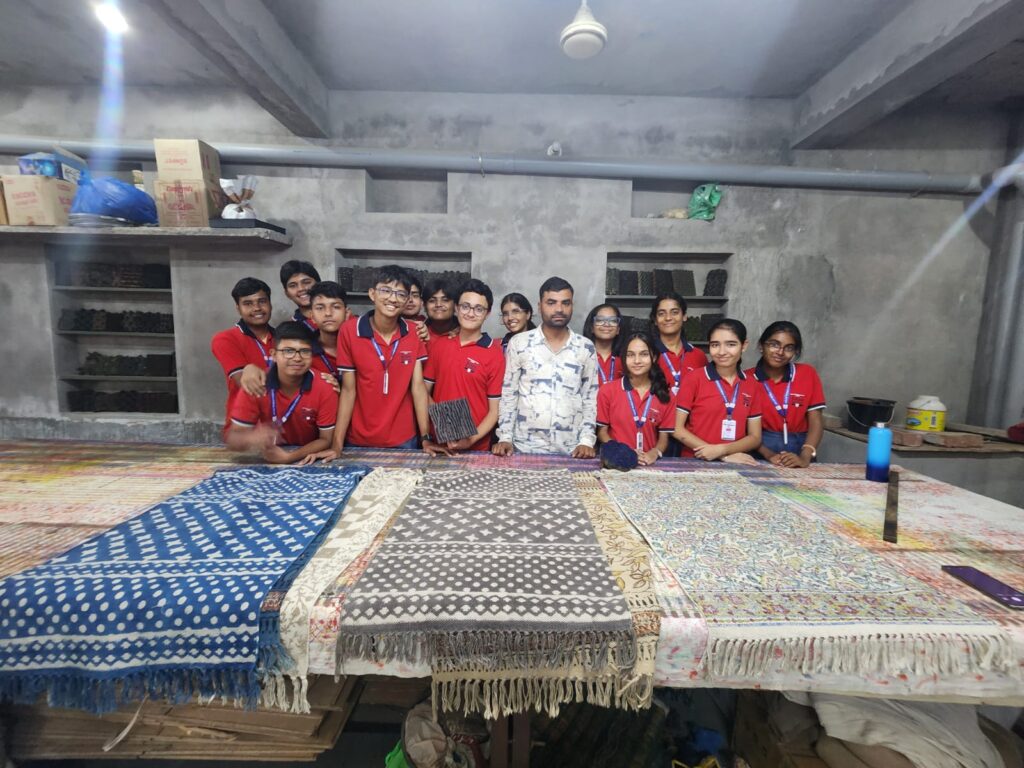
Looking for a block printing workshop for students in Jaipur? Before you book one and pay per student, there’s something worth knowing — Anaprinta’s block printing student visit in Jaipur, held at its studio in Bagru, is completely free. Not a discount. Not “free if you also buy printing.” The full visit — seeing how a wooden block is carved, how natural colours are made from plants, and how the whole printing process works — costs the school nothing at all. The only thing that ever costs money is optional: if a student wants to print their own fabric, that starts at ₹250, and only that student pays. Anaprinta’s block printing student visit in Bagru, Jaipur is completely free for every student in the group. It covers the full craft — history, block-carving, natural dyeing, everything. Hands-on printing is optional and costs from ₹250 per student, paid only by the students who want it, not the whole group. The studio is at 9, Namdev Colony, Lal Koti, Bagru — PIN 303007, about 30 km (45 minutes to 1 hour) from Jaipur city. Book on anaprinta.com or WhatsApp/call +91-9799474072. Below is the full detail — what’s free, what’s optional, what a visit looks like, and how to book your date. Why a Free Bagru Visit Beats a Paid Block Printing Workshop A typical block printing workshop for students in Jaipur bundles the visit and the printing into one fixed price, so a group of 40 students pays 40 times over — even if only 10 of them actually want to print. Anaprinta separates the two. The block printing student visit itself — the history of Bagru’s 400-year-old hand block printing tradition, the wooden block-carving demo, the natural dye-making process, and a full walkthrough of how Rajasthani block printing actually works — costs nothing for the group. Printing is the only paid part, and it’s charged per student, not per group. This is a working Bagru printing studio, not a staged tourist stop for student visit Jaipur itineraries. The artisans who walk students through hand block printing are the same families who have practiced this craft for generations. Why Schools and Colleges Choose This Bagru Block Printing Visit What’s Included in the Free Block Printing Student Visit What Students Get Cost History and introduction to Bagru’s block printing tradition Free Live demo of hand-carved wooden block-making Free Natural dye preparation demo (plant and mineral sources) Free Full walkthrough of the block printing and finishing process Free Q&A with working Bagru artisans Free Hands-on block printing (only for students who opt in) Starting from ₹250 per student (varies by technique/fabric)  For most school and college groups, the free block printing student visit is enough on its own — it’s an educational tour of Jaipur’s textile heritage, not a paid activity. Students who want a hands-on souvenir — a printed scarf, tote bag, bandana, or rug — can add the printing session individually. How the Optional Hands-On Printing Works Because the base visit is free, hands-on block printing is arranged per student, not as a group package: Nobody is required to pay. Students who just want to observe, ask questions, and understand hand block printing can complete the entire student visit at zero cost. How to Book This Block Printing Student Visit in Jaipur For school trips, reach out at least two to three weeks in advance to secure your preferred date. Where This Bagru Block Printing Visit Takes Place Anaprinta’s studio address: 9, Namdev Colony, Lal Koti, Bagru, Jaipur — PIN 303007 Bagru is about 30 km from Jaipur city — roughly a 45-minute to 1-hour drive depending on traffic. Most schools arrange their own bus or cab for the group; we can help arrange transport too if needed. For groups that want to turn this into a longer trip, Anaprinta also offers comfortable stay options at the studio — useful if a single-day student visit to Jaipur turns into a two-day textile immersion in Bagru. Reach us anytime at anaprinta@gmail.com or +91-9799474072, or message us on WhatsApp through the website chat to confirm directions once your date is set. What Happens During the Block Printing Student Visit Every visit follows roughly this flow: Every student leaves with complete knowledge of block printing — and, for those who opted in, a piece of fabric they made themselves. Who This Block Printing Student Visit in Jaipur Is For This free Bagru block printing visit suits: FAQ About This Block Printing Student Visit Is the block printing student visit in Jaipur really free?  Yes. The full visit — history, block-carving demo, natural dye-making, and the entire hand block printing process explained — is free for students. There’s no entry fee or per-head charge for the visit itself. If it’s free, what am I actually paying for?  Only hands-on printing is paid, and only for the individual student who wants to try it. Charges start at ₹250 per student, depending on the technique and fabric chosen. Is this a workshop or just a visit?  It’s a guided, free educational visit — students see and learn everything about block printing from A to Z at no cost. It becomes a hands-on workshop only for the individual students who choose to pay and print. Do all students in a group have to pay if some want to print?  No. Payment is individual. Only students who want to physically print pay the charge; everyone else joins the free visit at no cost. How do I book a free block printing student visit for my school?  Contact Anaprinta through the website, call or WhatsApp +91-9799474072, or email anaprinta@gmail.com with your preferred date and group size. Where exactly is the Bagru block printing studio?  At 9, Namdev Colony, Lal Koti, Bagru, Jaipur — PIN 303007, about 30 km from Jaipur city. How do we get to Bagru from Jaipur city?  It’s a 45-minute to 1-hour drive by road. Most groups arrange their own bus or cab, and we can help

What Is Hand Block Printing? A Complete Guide to India's Traditional Craft
Block Print

What Is Hand Block Printing? A Complete Guide to India’s Traditional Craft

Hand block printing is a simple but skilled way of printing fabric by hand. A person carves a design into a wooden block, dips it in dye, and presses it onto cloth over and over to build a pattern. No machine is used at any step. This is why hand block printing is one of India’s oldest and most loved textile crafts. Why People Ask This Question You see a beautiful printed fabric online. The colors look natural. The pattern feels a little uneven, in a good way. You wonder: is this really made by hand, or just printed by a machine and sold at a high price? That doubt is fair, since many “handmade” labels today are not fully true. This guide answers what is hand block printing in plain, simple words, based on real work we see every day. At Anaprinta, we run a hand block printing studio and workshops in Bagru, near Jaipur. Our studio is led by Anup Chhipa, a fifth-generation block printer, along with elders Damodar ji Chhipa and Sushila ji Chhipa, who carry decades of hands-on printing knowledge. Key Takeaways  What Is Hand Block Printing?  It means printing a design on cloth using a wooden block that has a pattern carved into it. The artisan dips the block in dye, then presses it firmly on the fabric, repeating this across the whole cloth until the full pattern is done. There is no automation here. Every press depends on the artisan’s hand, eye, and years of practice. This is why no two hand block printed pieces look 100% identical — that small difference is proof a real person made it. A Short History of Hand Block Printing in India Hand block printing in India goes back several centuries, growing strong in Rajasthan, Gujarat, and Madhya Pradesh. Bagru, a small town about 32 km from Jaipur, became famous for this craft. The Chhipa community here trace their roots to Saint Namdev of Maharashtra and are believed to have settled in Bagru close to 400 years ago. A local river gave printers the clean water needed for washing fabric and natural dyeing, which helped Bagru grow into a strong printing hub, later supported by Maharaja Sawai Jai Singh II. Families in Bagru have carried this work forward for generations. In 2009, Bagru print received an official GI (Geographical Indication) tag, protecting it from mass-market copies. Read more on our About Us page. Hand Block Printing vs Screen Printing vs Digital Printing Feature Hand Block Printing Screen Printing Digital Printing Who does the work Fully by hand, one block at a time Part machine, part hand Fully machine Look and feel Slight natural variation Very even and repeated Perfectly exact every time Speed Slow, takes real time Faster Fastest Cost Higher, needs skilled labor Medium Lower Is it truly handmade? Yes, 100% Only partly No If you want fabric with a real story and human touch, hand block printing is the clear choice. The Hand Block Printing Process, Step by Step The easiest way to fully understand what is hand block printing is to see how it’s actually done. Step 1: Design and Block Carving An artisan draws the design, then carves it into a teak wood block using small chisels. A detailed block can take days or weeks to finish. Step 2: Fabric Preparation The cotton fabric is washed to remove starch and dirt, so it can absorb dye evenly. Step 3: Dye Mixing Natural or pigment dyes are mixed in small batches, often in shades like indigo blue and madder red. Our guide on natural indigo dyeing in Bagru explains this in detail. Step 4: Printing on Fabric The block is dipped in dye and pressed firmly on the cloth, again and again, lining up the pattern by hand each time. Beginners often start with pigment block printing, which is simple to learn. Step 5: Drying and Fixing the Color The printed fabric is sun-dried, and sometimes steamed or washed again so the color lasts longer. Step 6: Final Check and Finishing The fabric is checked for quality, trimmed, and made ready for sarees, bedsheets, dupattas, or clothes. Popular Types of Hand Block Printing in India See the black-and-red method in our Syahi Begar printing guide, or explore nature-based methods in our eco printing post. Why Bagru, Jaipur Is the Home of This Craft Bagru is home to Chhipa Mohalla, a printer’s quarter where families are still absorbed in blocks and dyes. At Anaprinta, our studio gives visitors a real, hands-on look at this craft — the same process our family and local artisans use every day. Check our workshops page for one-day, two-day, and four-day options, priced from ₹3,000 to ₹20,000 per person. Benefits of Choosing Hand Block Printed Fabric How to Spot Real Hand Block Printed Fabric Browse our block-printed products, including our pure cotton long kurti and natural print rugs, to see real examples. FAQ – What Is Hand Block Printing 1. What is hand block printing in simple words?  A hand technique where a carved wooden block is dipped in dye and pressed onto fabric to create a pattern, done fully by hand with no machine. 2. Where did hand block printing come from?  It began in India, and Rajasthan, especially Bagru near Jaipur, is one of its most well-known centers. 3. Is hand block printing eco-friendly?  Yes, in most cases. Many artisans use natural, plant-based dyes and water-based methods that are gentler on the environment. 4. How long does one piece of hand block printed fabric take?  Simple patterns may take a few hours, while detailed ones can take several days. 5. Why does hand block printed fabric cost more?  It needs skilled hands, hand-carved wooden blocks, and a slow, careful process, unlike fast machine printing. 6. Which fabric works best for hand block printing?  Cotton and other natural fibers, since they absorb dye evenly and hold color well. 7. Can beginners learn hand block printing?  Yes. Many workshops, including

Block Printing Workshop in Jaipur: The Complete Guide
Uncategorized

Block Printing Workshop in Jaipur: The Complete Guide

A block printing workshop in Jaipur is a hands-on session, usually held in Bagru village, where you learn hand block printing using carved wooden blocks, natural dyes, and traditional techniques like Dabu resist printing. Sessions range from a single 5-hour day to a full 6-day immersive course, with prices between ₹3,000 and ₹20,000 depending on how many techniques you want to learn, and most include lunch, materials, and a finished piece to take home. That’s the short version. But if you’ve searched around, you’ve probably noticed something confusing — some listings quote ₹500, others quote ₹15,000, and nobody explains why. Keep reading, because the difference actually matters. Bagru: The Village Behind Every Block Print You’ve Seen in Jaipur Before booking anything, it helps to know where this craft actually comes from — because that’s what separates a real workshop from a tourist stunt. Bagru is a small town about 30–35 km from Jaipur city, and it’s the actual home of hand block printing in this region — not Jaipur itself. Local legend says a Thakur (feudal lord) brought printing families from a nearby village to settle here and build a printing trade, and those families belonged to the Chhipa community — the traditional block printers and dyers of Rajasthan. That was somewhere between 400 and 500 years ago. The Chhipas are still here, still printing, and many of Bagru’s current artisans are fourth or fifth-generation printers working out of the same family workshops. What Makes Bagru Print Different A few things you’ll only find in genuine Bagru printing: If a workshop doesn’t mention any of this — dyes, Dabu, or the Chhipa community — it’s probably a simplified, tourist-style demo rather than the real craft. What You’ll Actually Learn in the Workshop This is the part most listings gloss over. Here’s what a proper hands-on session actually walks you through, step by step. Meeting the Blocks You start with the printing blocks themselves — hand-carved from seasoned teakwood, sometimes taking artisans several days per design. Complex motifs often need two or three separate blocks, one per color layer. Understanding the Dyes You’ll see how natural dyes are prepared using indigo, madder root, and other plant and mineral sources — not synthetic pigment. Every batch comes out slightly different, which is exactly what gives hand block printing its character. Fabric Preparation Cotton is washed and pre-treated before printing so the color actually holds. Skip this step, and the print fades fast — one reason machine-made “block print style” fabric never quite matches the real thing. Hands-On Printing Now it’s your turn. You press the block firmly, lift it clean, and repeat the pattern across your fabric. It looks easier than it is — most first-timers are surprised by how much rhythm and hand pressure this takes. Drying and Finishing Fresh prints dry under the open sun, often right through Bagru’s famous “Fields of Color.” You’ll walk through this yourself — it’s one of the most photographed parts of the whole experience. Duration and What’s Included Unlike a quick 30-minute demo, a real hands-on workshop takes time. Here’s how it typically breaks down: Workshop Type Duration What’s Included Quick demo (city-based) 30–60 min Watching only, minimal hands-on time One-Day Workshop ~5 hours (9 AM–2 PM) One technique, one finished product, lunch One-Day Workshop 2.0 ~5 hours (9 AM–2 PM) Two techniques (pigment + eco-printing), lunch Two-Day Workshop 2 days (9 AM–2 PM daily) Dabu resist, natural dyeing, three products, lunch Four-Day Workshop 4 days (9 AM–2 PM daily) Four techniques, comprehensive skill-building, lunch Six-Day Workshop 6 days (9 AM–2 PM daily) Full immersion — 7 natural dyes and 7 printing techniques, lunch What Does a Block Printing Workshop Cost in Jaipur? Real, current pricing (based on Anaprinta’s own workshop packages): If a listing quotes ₹500–800 for a “full workshop,” it’s almost certainly a short demo, not a genuine hands-on session — fine if that’s what you want, but worth knowing before you book. Who Should Book a Block Printing Workshop? No art background needed — artisans guide you through every step. That said, certain travelers get particular value from it: Inside Anaprinta’s Studio in Bagru Anaprinta runs its workshops from a working print studio in Bagru, near Jaipur — not a set-up built purely for tourists. You’re learning inside the same space where fabric is genuinely produced for real orders, taught by Chhipa artisans who print for a living, not for performance. Every session includes: If you’d like to see the finished fabric quality before you commit, browse Anaprinta’s product collection — made using the same pigment, natural, and resist techniques taught in the workshops. You can also read more about the studio’s background on the About Us page. Practical Tips Before You Book Block Printing vs. Other Rajasthan Craft Experiences Craft Where Hands-On Level Typical Duration Hand Block Printing Bagru, Sanganer High 5 hours to 4 days Blue Pottery Jaipur city Medium 1–3 hours Bandhani (Tie-Dye) Jaipur, Jodhpur Medium 1–2 hours Miniature Painting Jaipur city Low to Medium 1–2 hours Block printing generally offers the most physically engaging, take-home-worthy result of the four — which is likely why demand for a block printing workshop near Jaipur has grown steadily as travelers shift from generic sightseeing toward hands-on cultural experiences. Key Takeaways FAQ – Block Printing Workshop in Jaipur What is a block printing workshop in Jaipur?  It’s a hands-on session where you learn traditional hand block printing using carved wooden blocks and natural dyes, typically held in Bagru village near Jaipur. Where is the best place for a block printing workshop in Jaipur?  Bagru, about 30–35 km from Jaipur city, is the most authentic location, home to the Chhipa printing community for roughly 400 to 500 years. How much does a block printing workshop cost in Jaipur?  Genuine hands-on workshops range from around ₹3,000 for a one-day session to ₹20,000 for a full six-day immersive course covering seven natural dyes and seven printing techniques. Do I need prior experience to

Tie and Dye in Rajasthan Bandhani, Leheriya and the Art of Resist Dyeing
Block Print

Tie and Dye in Rajasthan Bandhani, Leheriya and the Art of Resist Dyeing

Walk through any market in Jaipur and a dupatta or turban will stop you mid-step — small dots scattered like tiny stars, or stripes rippling across the cloth like water. This is tie and dye, one of Rajasthan’s oldest textile crafts, and the interesting part is that none of that colour is painted or printed on. The pattern comes from what the dyer stops the colour from reaching. This guide covers how tie and dye actually works, the difference between Bandhani and Leheriya, the other tie dye techniques used across Rajasthan, and where all of this fits alongside Bagru and Sanganer’s better-known block printing crafts. Table of Contents What Is Tie and Dye? Tie and dye is a form of traditional resist dyeing — the fabric is tied, folded, twisted or knotted before it goes anywhere near the dye. Whatever part of the cloth is bound up stays protected. Everything left exposed soaks up the colour. Once the threads are removed, the pattern that was hiding underneath finally shows itself. That’s really the whole idea, and it’s also why the common search term “tie dye printing” is a bit of a misnomer, even though a lot of people use it. Nothing is actually printed here — no block, no stamp. The design comes entirely from how the fabric itself is handled before dyeing, which makes tie resist dyeing a genuinely different craft from block printing, even though both sit under Rajasthan’s much wider umbrella of resist-dyeing traditions. It’s also worth saying upfront: tie and dye isn’t a niche or dying craft. Walk into almost any wedding hall, festival or family function in Rajasthan and you’ll spot Bandhani or Leheriya somewhere in the room — on a dupatta, a saree pallu, a turban, or a scarf draped over someone’s shoulder. It’s woven into daily life here, not locked away in museums. History of Tie and Dye in Rajasthan Rajasthan tie dye goes back a long way — tying and dyeing cloth by hand has been practised in India for centuries, with some of the earliest evidence coming from old paintings that show figures dressed in dotted, speckled fabric. Over generations, Rajasthani tie dye developed its own distinct styles, separate from how the craft evolved in other parts of the country. The artisan community traditionally associated with this craft is often referred to as the Rangrez — a word that simply means “those who dye fabric.” Families from this community have passed the skill of tying and dyeing down through generations, and in many cases, the exact patterns and colour combinations used are still specific to a particular family or workshop. Jaipur Leheriya in particular carries a strong regional identity. Documentation from the National Institute of Design’s D’Source project records Leheriya as a tie-and-dye tradition closely tied to Jaipur, where the cloth is twisted, wrapped around a wooden pole, and tied at regular intervals before it’s dyed. Both Bandhani and Leheriya have long been part of everyday and festive Rajasthani dress — turbans, odhnis, dupattas, sarees and suits worn during weddings and celebrations, often with specific colours and patterns carrying their own meaning depending on the community, the season, or the occasion being celebrated. How Does the Tie and Dye Process Work? The exact steps shift a little depending on whether an artisan is making Bandhani, Leheriya or another variation, but the basic tie and dye process looks like this: 1. Washing and Preparing the Fabric The cloth — usually cotton or fine silk — is washed first to remove starch or dust that could stop the dye from taking evenly. Fabric that isn’t cleaned properly ends up with patchy, uneven colour once it’s dyed, so this step matters more than it looks like it should. 2. Marking or Folding For Bandhani, tiny points are marked out across the fabric, sometimes with a printed grid as a guide so the dots line up into a recognisable pattern. For Leheriya, the cloth is folded diagonally and rolled tightly along its length instead, with no dot-marking involved at all. 3. Tying the Resist Points This is the most skilled part of the whole craft. In Bandhani, artisans pinch and tie hundreds, sometimes thousands, of tiny points by hand, often using a long fingernail to lift each pinch of cloth before wrapping thread around it. In Leheriya, the rolled fabric is tied at set intervals along its length, which is exactly what creates the wave pattern once it’s opened out. Both methods demand a steady hand — too loose a tie and the dye seeps through; too tight and the fabric can tear. 4. Dyeing The tied fabric goes into the dye bath. Multi-coloured pieces are dyed more than once, with fresh ties added between rounds to protect the colours already achieved, working from the lightest shade to the darkest. 5. Drying With the Ties Still On The fabric dries with the knots left in place, keeping the pattern locked in until the artisan is ready to open it. Depending on the weather, this can take anywhere from a few hours to a couple of days. 6. Untying The threads are picked out slowly by hand — rushing this step can tear the fabric. It’s genuinely the most satisfying part to watch, since the hidden pattern shows itself for the first time here, dot by dot or fold by fold. 7. Washing and Finishing One final wash removes any loose dye before the fabric is dried, pressed, and ready to become a dupatta, saree, suit piece, turban or scarf. Traditional Tie and Dye Techniques of Rajasthan Rajasthan isn’t home to just one tie-dye style — there are several distinct tie dye techniques, each with its own look and method. Bandhani / Bandhej Bandhani, also known as Bandhej, is probably the style most people picture first — small, tightly-packed dots that build up into bigger patterns like flowers, waves or geometric grids. Some of the more well-known dot arrangements even have their own names, passed

Why Pigment Printing Is the Perfect Craft for Beginners
Block Print

Why Pigment Printing Is the Perfect Craft for Beginners: A Hands-On Bagru Experience

A hand block pigment-printed tote bag made in Bagru — the kind of piece you’ll take home from a one-day workshop. If you’ve ever wanted to try block printing but worried it looked too complicated for a first-timer — mud pastes, dye baths, waiting days for a pattern to reveal itself — there’s good news. There’s one technique in Bagru that skips almost all of that, and it’s exactly where most beginners start: pigment printing. At Anaprinta, our studio in Bagru, Jaipur, this is the very first technique most of our visitors learn, and for good reason. It’s direct, it’s quick to understand, and you can see your design appear on fabric within minutes, not days. In this blog, we’re breaking down what pigment printing is, how it fits among the many textile printing techniques practiced in India, how it’s different from other Bagru techniques like dabu and indigo, and why it’s the perfect block printing technique for beginners — whether you’re a curious traveler, a design student, or someone just looking for a hands-on day out near Jaipur. Table of Contents What Is Pigment Printing? Pigment printing is the most straightforward form of hand block printing practiced in Bagru. Instead of dipping fabric into a dye bath or using a mud-resist paste like in dabu printing, artisans mix pigment color paste directly and print it straight onto the fabric using hand-carved wooden blocks. What you print is what you get — no waiting for a chemical reaction, no washing away layers to reveal a hidden pattern. In simple words, if someone asks you “what is a pigment printing” technique, the easiest answer is this: it’s block printing without dye — color goes on top of the fabric surface and sets there, rather than soaking into the fibers through a dyeing process. Among the many textile printing techniques used across India — screen printing, digital printing, dyeing, and hand block printing — pigment printing remains one of the oldest and most hands-on, which is exactly why it still thrives in a craft town like Bagru. This is also the technique used in Bagru’s famous “Fields of Color” — the open stretches where freshly pigment-printed fabric is laid out to dry under the sun, one of the most photographed sights for anyone visiting Bagru. What Is a Pigment Print, Exactly? Pigment vs Dye Explained To really understand pigment printing on fabric, it helps to know the difference between a pigment and a dye: Because pigment sits on the surface rather than penetrating the fabric, the process is faster and far easier to control — which is exactly why it’s the first technique taught to beginners at almost every Bagru workshop, including ours. Pigment Printing vs Dabu vs Indigo — Where It Fits in Bagru’s Craft Tradition Bagru is home to several block printing techniques, and it’s easy to mix them up if you’re new to the craft: If you’re planning your first hand block printing workshop and wondering where to start, pigment printing is almost always the right entry point. It teaches you the fundamentals — block handling, pressure, alignment, color mixing — without the added complexity of resists or dye chemistry. Once you’re comfortable with pigment work, techniques like dabu and indigo make a lot more sense. The Pigment Printing Process, Step by Step Here’s what actually happens when a piece of fabric goes from plain cotton to a finished, pigment-printed piece. Step 1: Preparing the Fabric Just like every other Bagru technique, the raw cotton fabric is first washed to remove starch and impurities, then left to dry fully in the sun. Clean, dry fabric absorbs the pigment paste evenly. Step 2: Choosing the Block Artisans select a hand-carved wooden block based on the motif — florals, borders, geometric patterns, or traditional Bagru designs. For beginners, simpler single-block designs are usually recommended to start. Step 3: Mixing the Pigment Paste The pigment color is mixed with a binder and a thickening agent to create a smooth, printable paste — this is the pigment-based ink that gives the technique its name. Getting the right consistency matters: too thin and the print smudges, too thick and it won’t transfer cleanly from the block. Step 4: Printing the Design The block is dipped into the pigment paste and pressed firmly onto the fabric by hand, repeated across the length of the cloth. Because there’s no resist or dye step afterward, you can literally see your finished design appearing in real time — which is what makes this technique so satisfying for someone printing for the very first time. Step 5: Drying and Curing Once printed, the fabric is dried, usually under the sun in Bagru’s open “Fields of Color,” and then heat-cured (traditionally with ironing) to help the pigment bind to the fibers. Unlike dye-based techniques, pigment printing doesn’t need an afterwash to fix the color — curing alone locks it in place. Step 6: Final Finishing A final quality check and light trimming complete the process, leaving you with a fabric piece that’s ready to use, wear, or display — all done within a single day. Why Pigment Printing Is the Perfect Craft for Beginners If you’re searching for block printing techniques for beginners, pigment printing checks almost every box: This is exactly why pigment printing forms the core of introductory workshops across Bagru, including our own. Learning Pigment Printing at Anaprinta At Anaprinta, our One-Day Workshop (₹3,000 per person) is built specifically around hand block pigment printing — it’s designed as a true beginner’s introduction to Bagru’s craft, with no experience required. Through the session, you’ll: If you’d like to go a step further, our One-Day Workshop 2.0 (₹5,000) combines pigment printing with eco-printing in the same session, and our Four-Day Workshop (₹15,000) takes you through all four Bagru printing methods — pigment, natural, resist, and Jahota/Shibori — for anyone who wants to master the craft in depth. You can see the full breakdown on our workshops page. Unlike

syahi begar printing
Block Print

Hand Block Printing Workshop in Bagru: Learn Syahi Begar, Rajasthan’s Black & Red Printing Art

If you’ve ever held a piece of fabric with deep black outlines and warm brick-red fills, and wondered how something so bold could be made without a single drop of synthetic ink, you’ve probably been looking at syahi begar printing. It’s one of the oldest and least talked-about crafts of Bagru. Most people who visit Jaipur have heard of Bagru’s mud-resist dabu prints or Sanganer’s delicate floral motifs. Fewer people know about syahi begar, even though it’s one of the oldest surviving styles of traditional Rajasthan textile craft still practised by hand today. At Anaprinta, our hand block printing workshop in Bagru covers this exact craft. In this blog, we’re breaking down what syahi begar actually is, how it’s made, and why it deserves a lot more attention than it currently gets. Table of Contents What Is Syahi Begar Printing? Syahi begar printing is a traditional two-colour hand block printing technique native to Bagru, a small town about 30 km from Jaipur. The name comes from its two core ingredients: syahi, the black dye, and begar, the reddish-brown dye. Together, these two colours create the deep, earthy motifs that Bagru has been known for over the last 300-plus years. Unlike mud-resist dabu printing, where a paste blocks the dye from reaching the fabric, syahi begar is a direct printing technique. Both colours are printed straight onto the cloth using hand-carved wooden blocks, one after the other, to slowly build up the final design. Along with dabu, syahi begar is considered one of the two signature styles of bagru hand block printing, practised for generations by the Chhipa community, the artisan families who have called Bagru home for over 300 years. Historically, syahi begar was also common in nearby printing centres like Bagh in Madhya Pradesh and Tarapur, though Bagru remains the most active hub for it today. Who Keeps Syahi Begar Alive Today This craft isn’t taught in institutes or documented in manuals. It’s passed down inside families, from one generation of printers to the next. The Chhipa community in Bagru has practised natural dye hand block printing for centuries, and even today, most syahi begar workshops in the area are run out of home courtyards rather than commercial factories. Every artisan family tends to have its own small variations in how they prepare the syahi. Some ferment it longer, some add slightly different proportions of jaggery, and that’s part of why no two workshops, or two artisans, produce identical results. Bagru, Sanganer and Jaipur — Three Different Printing Traditions People often lump Bagru, Sanganer and Jaipur’s printing together, but each has its own personality. Knowing this difference matters if you’re a design student, a buyer, or just someone planning a trip — because “Jaipur block printing” as a phrase often hides which actual village and technique you’re really looking at. If you’re shopping for fabric or planning to visit a workshop, asking specifically whether it’s a Bagru, Sanganer, or Dabu print will get you a much more accurate answer than just asking for “Jaipur prints.” The Syahi Begar Printing Process, Step by Step Making a single length of syahi begar fabric involves several stages, and every one of them is still done by hand in Bagru. Step 1: Washing and Preparing the Fabric The raw cotton, known locally as kora cloth, is first washed to remove starch and natural oils, then left to dry completely in the open. This step matters more than it looks. Any leftover residue on the cloth can stop the dye from binding evenly later, leaving patchy or uneven colour once the fabric is finished. Step 2: Treating the Fabric with Harda Once clean, the fabric is treated with a harda mordant, a powder made from myrobalan fruit, mixed with water. This gives the cloth a faint yellow tint and creates the surface the black and red dyes will actually bond to. Without this step, neither syahi nor begar would hold onto the fabric properly. Step 3: Preparing the Syahi (Black Dye) Syahi is made by fermenting rusted iron scraps with jaggery and water in an earthen pot, sometimes for weeks. In summer this can take 10 to 15 days, while winter’s cooler temperatures can stretch it closer to six weeks. The mixture is later thickened with tamarind seed powder and gum so it can be printed cleanly with a wooden block, without bleeding into the fabric. Step 4: Preparing the Begar (Red Dye) Begar is a mordant paste made from alum, a little red ochre (geru), and natural tree gum, usually from the acacia or babool tree. On its own, it looks pale and unremarkable. Its rusty red colour only shows up fully once the fabric goes through a later dyeing and boiling stage, when the alum reacts with natural dye to produce that signature terracotta-red. Step 5: Block Printing the Outline The artisan first prints the black outline using a carved wooden block known locally as the datta. This forms the skeleton of the design — every leaf, flower, or geometric pattern starts here. Step 6: Filling in the Begar Once the black outline is set, a second block is used to fill in the red sections within that outline. Lining this up by eye, without smudging the first colour, is where an artisan’s years of practice really show. A single misaligned stamp can throw off an entire length of fabric, so most printers work in a steady, practised rhythm built over years, not months. Step 7: Dyeing and Boiling The printed fabric is then dyed and boiled in large copper vats, often using natural alizarin, which reacts with the mordants already sitting in the fabric to develop the final black and red shades fully. Step 8: Washing and Sun-Drying The last step is a thorough wash to remove excess dye and gum, followed by drying under the open Rajasthan sun. Fabric is typically laid out across large open fields near the workshops. This final dry is what gives syahi begar fabric

eco printing in Bagru
Block Print

Eco Printing Workshop in Bagru: How Leaves & Flowers Turn Into Wearable Art

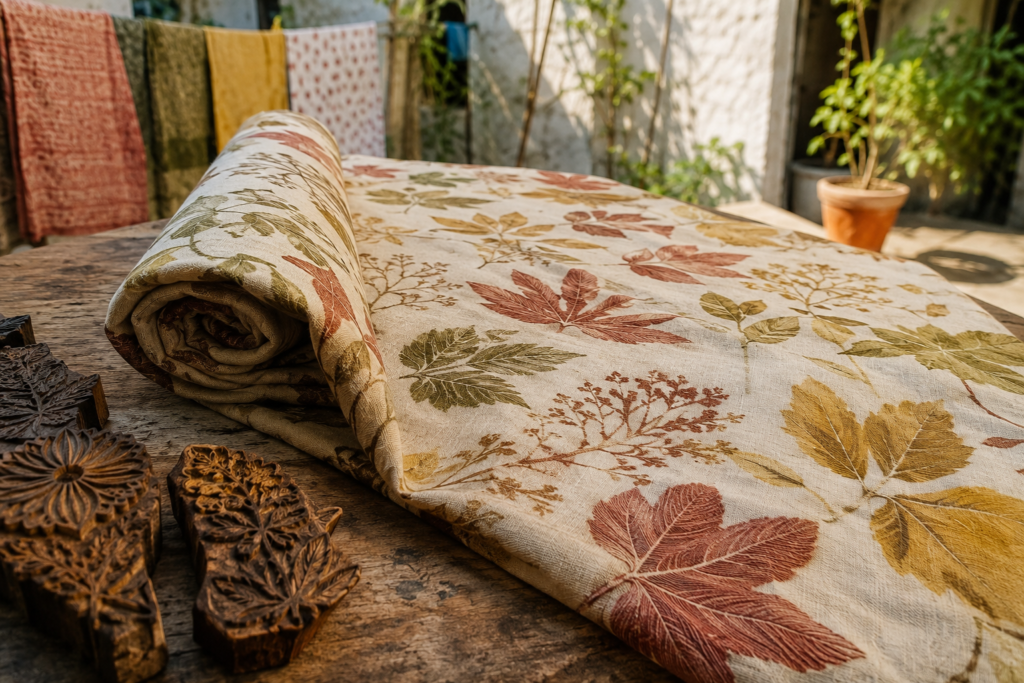
If you’ve ever picked up a fallen leaf and wondered why it left a stain on your palm, you’ve already brushed against the idea behind eco printing. In Bagru — a small artisan town near Jaipur that has been synonymous with hand block printing for centuries — this old instinct has grown into a craft of its own. No chemical dyes, no printing blocks even. Just real leaves and flowers, steam, and time. This blog walks you through what eco printing in Bagru actually is, how it’s different from the block printing Bagru is famous for, the step-by-step process, and why more designers, students, and conscious travellers are booking a seat at this workshop every month. What Is Eco Printing? Eco printing — also known as botanical printing — is a natural dyeing technique where leaves and flowers are placed directly on fabric and steamed or boiled until their pigments transfer onto the cloth. It’s essentially eco printing on fabric or flower printing on fabric in its simplest, most literal form: no stencils, no repeat patterns, just the plant itself making contact with the cloth. Unlike the stovetop version found in most home tutorials, the technique taught in Bagru is rooted in the same natural-dyeing knowledge local artisans already use for indigo and dabu printing. Every leaf behaves differently. Marigold petals bleed into soft yellows, pomegranate leaves lean toward warm ochres and browns, and tannin-rich leaves can turn a deep grey-black once treated with an iron solution — the same iron (kashish) Bagru’s artisans already use for their black and dark tones in traditional dyeing. No two fabrics ever turn out the same — that’s the entire charm of it. Bagru’s Connection to Eco Printing Bagru’s story with colour goes back over 400 years, when the Chhipa community of dyers and printers settled near the local river and clay-rich soil — both essential for mordanting, dyeing, and washing fabric. While Bagru built its global reputation on hand block printing using hand-carved wooden blocks, the same artisans who prepare indigo vats and dabu mud-resist paste bring that same depth of natural-dyeing knowledge to eco printing, which fits naturally into Rajasthan art culture‘s long-standing relationship with plant-based colour. So when you learn eco printing in Bagru, you’re not learning an imported hobby craft — you’re learning it from people who already understand how pigment, mordant, and fabric behave together. Eco Printing vs Traditional Block Printing It’s easy to confuse the two, so here’s the simple difference: Block Printing Eco Printing Tool used Hand-carved wooden blocks Real leaves and flowers Design Repeating, planned patterns One-of-a-kind, organic patterns Dye application Stamped by hand Transferred through steam/heat Best learned alongside Dabu and indigo dyeing Natural dyeing basics If you’re curious about the older dabu resist method Bagru is best known for, we’ve covered that in detail in our blog on how mud turns into art through Dabu printing. And if indigo fascinates you, our complete guide to natural indigo dyeing in Bagru breaks down the fermentation and vat-dyeing process. The Eco Printing Process, Step by Step Why Eco Printing Is One of the Most Eco-Friendly Printing Methods It’s a small-batch, slow process by nature — which is precisely why it can never be mass-produced the way chemical printing is, and why it stays valuable. From Fabric to Framed Botanical Prints While most people picture eco printing on scarves or stoles, the same technique works beautifully on paper and canvas too. A well-executed eco print — with clean leaf outlines and rich tannin colour — makes a striking piece of wall art on its own. Many workshop guests choose to eco-print a piece of heavy cotton or handmade paper purely to frame it later; framed botanical prints made this way carry a texture and depth that no printed reproduction can match, since the “print” is quite literally made by the plant itself. Why Learn Eco Printing at Anaprinta A lot of people search for a natural dyeing workshop near Jaipur without realising the most authentic version of it is happening right in Bagru. At Anaprinta, this craft isn’t taught as an isolated demo — it’s part of our One-Day Workshop 2.0, where you get to combine traditional pigment block printing with hands-on leaf-and-flower printing in the same session, guided by artisans who work with natural dyes every single day of the year, not just for tourist workshops. Here’s what makes the experience different: Whether you’re a design student researching botanical prints for a college project, a boutique owner looking to source eco friendly printing for a new collection, or a traveller from abroad who wants a slow, hands-on day away from the usual tourist circuit — this workshop is built to work for all three. Book the One-Day Workshop 2.0 at Anaprinta → FAQs Is eco printing the same as block printing? No. Block printing uses hand-carved wooden blocks to stamp repeating patterns, while eco printing uses actual leaves and flowers pressed directly onto fabric — no two results are ever identical. Do I need any prior experience to join the workshop? Not at all. The One-Day Workshop 2.0 is designed for complete beginners, including college students and first-time visitors to Bagru. How long does an eco-printed fabric last? With proper aftercare — gentle hand wash, no direct harsh sun for very long durations, and mild detergent — an eco-printed piece can retain its colour and pattern for years. Can I bring my own fabric for eco printing? Yes, natural fabrics like cotton, silk, and linen respond best. Our team can guide you on fabric choice before your workshop date. Ready to see leaves turn into art on your own fabric? Book your Bagru workshop with Anaprinta today.

Indigo Dyeing
Block Print

What Is Indigo Printing? A Complete Guide to Natural Indigo Dyeing in Bagru (With Workshop Experience)

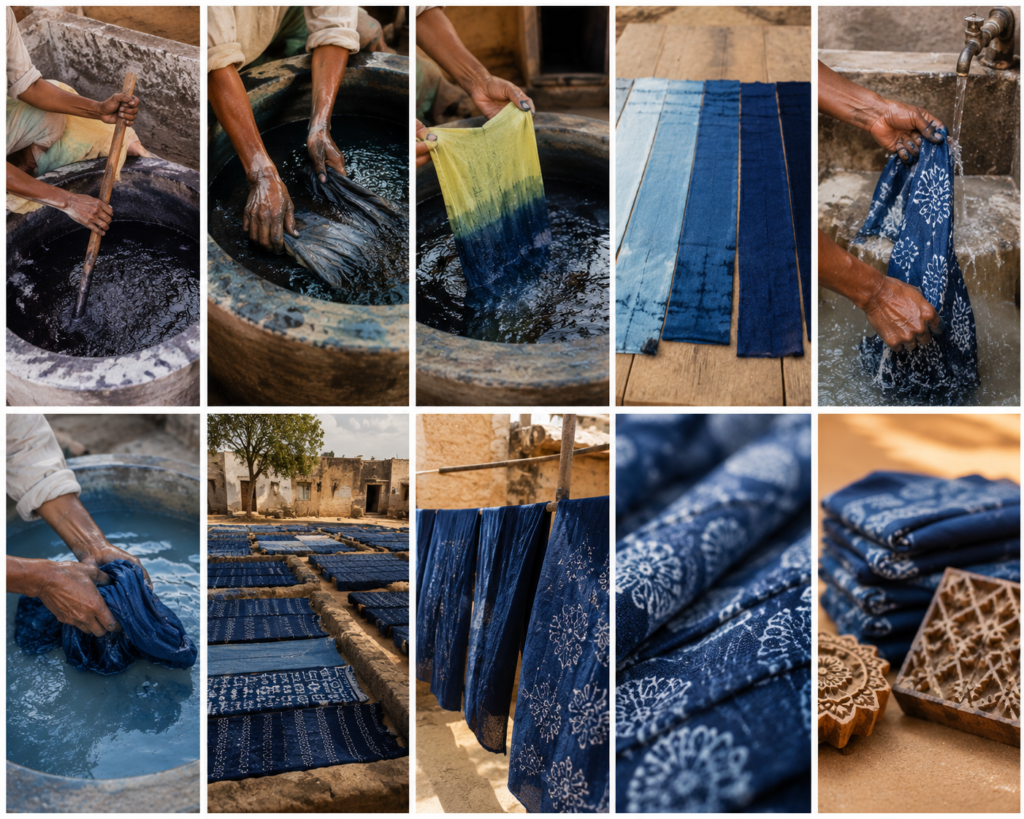
There’s a particular shade of blue you only find in Rajasthan. It’s not the blue of a swimming pool or a printed t-shirt. It’s deeper, a little uneven in places, and it seems to glow rather than just sit flat on the fabric. If you’ve ever picked up a dupatta, a cushion cover, or a bedsheet from Bagru and wondered how that colour got there, the answer is almost always the same: indigo dyeing. A lot of people search for “indigo printing” expecting to find a printing technique, something done with a block or a machine. But indigo isn’t really printed on. It’s dyed, dipped, and coaxed out of a living vat that artisans have kept alive for generations, sometimes for years at a stretch. In this guide, we’ll clear up exactly what indigo printing means, walk through the real natural indigo dyeing process as it happens in Bagru today, look at the history behind it, and show you what it’s actually like to try it yourself at a workshop here. Table of Contents What Is Indigo Printing, Really? “Indigo printing” is the term most people type into Google, but in Bagru, artisans simply call it indigo dyeing, or locally, “neel ka kaam.” The confusion is fair. Most of what Bagru is famous for is block printing, so it’s natural to assume indigo works the same way, with a carved wooden block stamping colour onto the cloth. It doesn’t. Indigo is what’s known as a vat dye. That means the fabric is dipped into a tub of prepared dye rather than having colour pressed onto it with a tool. The strange part is that the blue doesn’t even show up while the fabric is inside the vat. It develops in the open air, right in front of your eyes, the moment the wet cloth touches oxygen. That reaction is the whole magic of indigo dyeing, and no other natural colour used in Bagru behaves quite like it. Where block printing does enter the picture is when artisans combine indigo with a mud-resist paste, known locally as dabu, before dipping the fabric. Wherever that mud sits on the cloth, the indigo can’t reach the fibres underneath. Once the mud is washed off later, a pattern is left behind in white or a lighter blue against the deep indigo background. If you want to understand that resist technique in more depth, we’ve written about it separately in our post on the Dabu printing process. So, in short: what people search for as indigo printing is really indigo dyeing, often paired with a resist technique to create pattern. Understanding that difference is the first step to appreciating how much skill actually goes into it. A Short History of Indigo in Bagru Bagru, a small town roughly thirty kilometres from Jaipur, has been printing and dyeing textiles with natural colour for close to three centuries. The Chhipa community here has passed the craft down through families, refining it generation after generation, and indigo has always held a special place among the colours they work with, alongside red from madder root and black from fermented iron filings. Indigo itself has a much older story that stretches far beyond Bagru. Indigofera tinctoria, the plant most Indian indigo comes from, was cultivated across the subcontinent for thousands of years before synthetic dye existed. During the colonial period, indigo grown in India became a major global trade commodity, valuable enough that it shaped entire regional economies and, in several parts of the country, led to well-documented conflict between farmers and plantation owners. That history is heavy, and it’s worth knowing, even if it isn’t the focus of this guide. What survived after synthetic indigo arrived in the late 1800s and largely took over the commercial market was the small-scale, artisan-led practice, kept alive in pockets like Bagru, Gujarat, and a few other textile regions of India. What makes Bagru’s version of natural indigo dyeing distinct even today is how tightly it’s woven into a larger printing tradition. Most places that specialise in indigo dyeing focus purely on colour: tie-dye, shibori, solid dips. In Bagru, indigo is almost always combined with hand-carved block printing and mud-resist work, which means the finished fabric carries both a dyeing tradition and a printing tradition at once. You’re not just looking at blue cloth. You’re looking at a technique that took generations, and more than one craft, to come together. The Science Behind Natural Indigo Dyeing You don’t need a chemistry background to follow how an indigo vat works, but knowing the basics helps you appreciate why the process looks the way it does. Natural indigo comes from the leaves of the indigo plant. On their own, fresh leaves don’t dye anything blue. The pigment locked inside them, called indigotin, isn’t soluble in water in its natural state. To make it usable, artisans ferment the harvested indigo along with lime and other alkaline materials, in a process that can take days. This fermentation strips oxygen out of the mixture and converts the pigment into a soluble, pale yellow-green form, sometimes called “white indigo” or leuco-indigo. This is the part that surprises most first-timers. When you dip fabric into a working indigo vat, it doesn’t come out blue. It comes out looking murky and greenish. It’s only once the fabric is lifted into open air that oxidation happens: the leuco-indigo reacts with oxygen and turns back into insoluble blue indigotin, this time trapped permanently inside the fibres of the cloth. Watching plain white cotton turn from green to blue in under a minute, right in your own hands, is genuinely one of the most memorable parts of an indigo dyeing session. A well-maintained indigo vat can be kept alive for months, sometimes years, with regular feeding of lime, alkaline material, and rest. Experienced dyers can tell a vat’s condition just from its smell, its surface colour, and the amount of foam, often called the “indigo flower,” that forms on top before deciding whether

Scroll to Top

Get in Touch for Stunning Custom Clothing Prints!