
Natural Dye Printing in Bagru: From Plant-Based Colors to Beautiful Hand Block Printed Fabrics
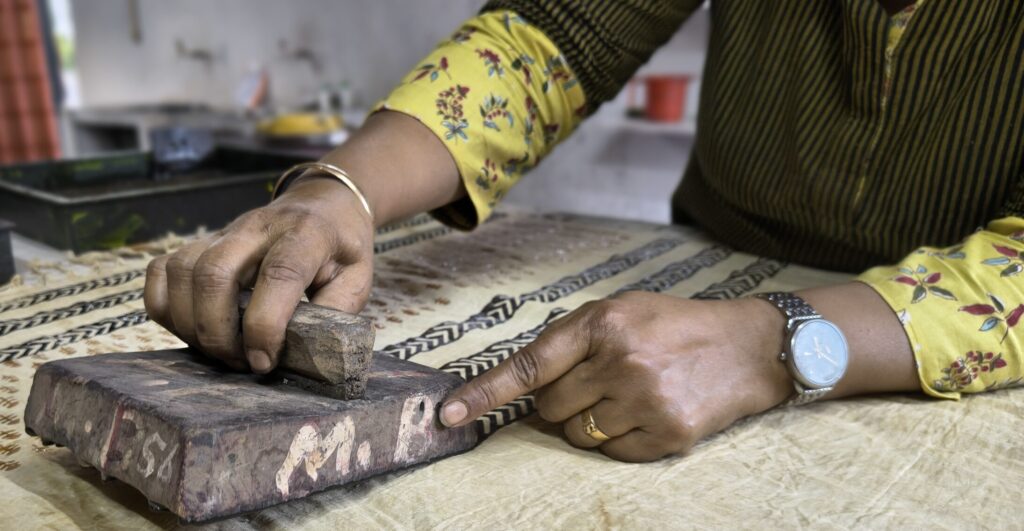
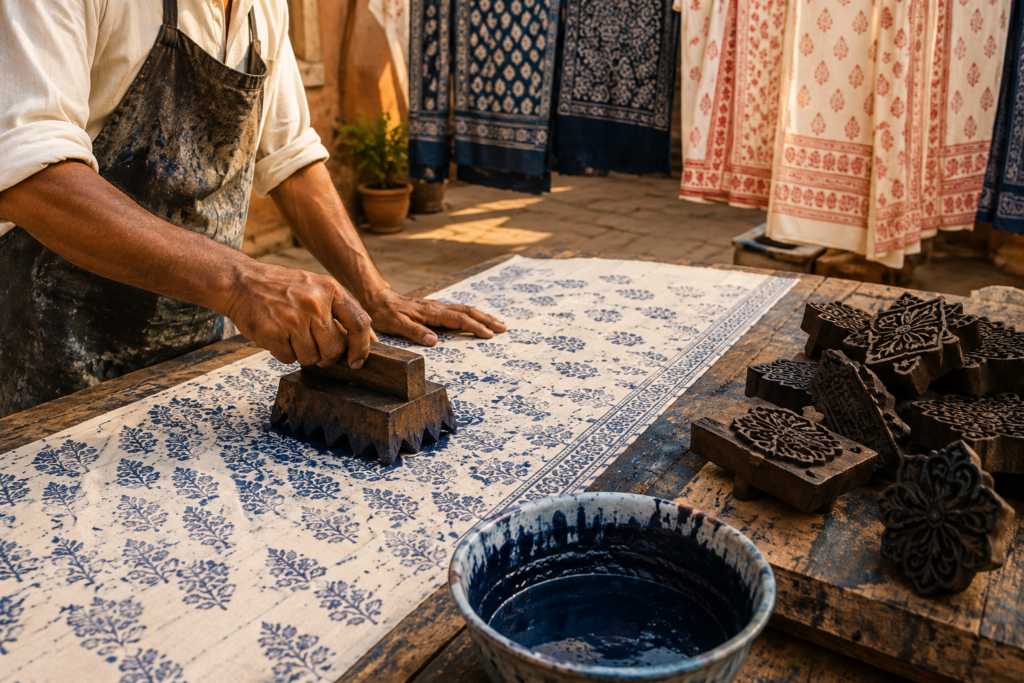
If you’ve ever picked up a hand-printed scarf or a block-printed kurta and noticed how the colors feel warm, slightly uneven, and somehow alive — that’s not a coincidence. That’s what happens when fabric is dyed with natural dye printing instead of factory chemicals. No two batches ever look exactly the same, and that’s the whole point. Close-up of a naturally dyed, hand block printed fabric folded on a wooden table, showing color variation “Hand block printed fabric dyed with natural colors in Bagru” At Anaprinta, we’ve grown up around this craft. Our studio sits in Bagru, a small town near Jaipur that has been quietly perfecting this plant-based printing tradition for centuries — long before “sustainable fashion” became a buzzword anyone talked about. In this blog, we’re walking you through what natural dye printing actually is, how it’s made from plants, flowers, and minerals, why it still matters today, and why so many people choose to learn it — or buy it — from Anaprinta and its owner, Anup Chhipa. What Is Natural Dye Printing? Natural dye printing is exactly what it sounds like — printing fabric using colors extracted from nature instead of synthetic, chemical-based dyes. Instead of a factory-made pigment, the color comes from plant roots, leaves, flowers, bark, minerals, and even insects. These natural colors are boiled, fermented, or mixed with a fixing agent (called a mordant) so they bind permanently to cotton or silk fibers. Unlike pigment printing, which simply sits on top of the fabric like a coat of paint, this plant-dyeing method actually penetrates the fibers. This is why naturally dyed fabric softens and looks even better with time and washing, instead of fading into a dull, flat version of itself. This isn’t a new trend either. It’s one of the oldest textile techniques known to human civilization, and Bagru, along with a handful of other towns in India, kept this knowledge alive when the rest of the world moved on to cheaper, faster chemical dyes. The Story Behind Bagru’s Natural Dye Printing Tradition To really understand why natural dye printing in Bagru is special, you need to know a little about the place itself. Bagru is home to the Chippa community — a name that literally means “those who print.” For 400 to 500 years, generations of this community have printed fabric using hand-carved wooden blocks and colors pulled straight from the earth. [ Artisan mixing natural dye in a large vat in a Bagru courtyard — Artisan preparing natural dye in Bagru workshop Two things are widely said to have made Bagru the right place for this craft: groundwater suited to washing and dyeing fabric without leaving stains or streaks, and access to mineral-rich clay and plant material used in dyeing and mud-resist work. Even today, if you walk through Bagru early in the morning, you’ll see courtyards lined with drying fabric, artisans mixing dye in large vats, and wooden printing blocks — some passed down through the family for decades — still doing the job perfectly. This living tradition is exactly what Anaprinta is built on. We’re not a modern brand trying to imitate an old craft — we’re part of the same community that has been doing this work for five generations. How Natural Dye Printing Actually Works — Step by Step Here’s where the real magic happens. Making a single piece of naturally dyed, hand block-printed fabric takes real time, not minutes, and every stage is done by hand. Step 1: Preparing and Washing the Fabric Raw cotton fabric being washed by hand before dyeing — “Washing raw cotton fabric before natural dyeing in Bagru”] Before any color touches the cloth, raw cotton or silk is washed thoroughly to remove starch and impurities. This step matters more than people realize — if the fabric isn’t cleaned properly, the dye won’t sit evenly, and the final colors will look patchy instead of rich. Step 2: Mordanting the Fabric soaking in a mordant solution before dyeing — “Mordanting fabric before natural dye printing process”] This is the step most people don’t know about, but it’s the reason natural fabric dye actually lasts. A mordant (commonly alum, myrobalan, or iron) is applied to the fabric before dyeing. Think of it as a bridge — it helps the natural dye molecules bond tightly to the fabric fibers so the color doesn’t wash out after a few uses. Step 3: Preparing Natural Colors from Plants, Flowers, and Miner Various natural dye ingredients laid out — indigo leaves, madder root, marigold, turmeric — Alt text: “Natural dye ingredients used in Bagru hand block printing”] This is the most fascinating part of the whole process, and it’s where natural dyes from flowers and other plant sources come in: Every one of these is a form of vegetable dye or plant-based color — nothing synthetic, nothing chemical. In fact, most of what’s used in this workshop can be traced back to a root, a flower, or a mineral you could point to in a garden or a kitchen. Step 4: Carving and Choosing the Wooden Blocks Hand-carved teakwood printing blocks arranged by pattern — “Hand-carved wooden blocks used for Bagru textile printing”] While the dyes are being prepared, artisans select hand-carved teakwood blocks based on the motif they want — florals, paisleys, geometric patterns, or traditional Bagru designs passed down through generations. A single block can take days or weeks to carve. Step 5: Block Printing the Fabric Artisan pressing a wooden block onto fabric by hand — “Hand block printing fabric with natural dye in Bagru”] The carved block is dipped into the natural color and pressed firmly onto the cloth by hand, one impression at a time. There’s no machine involved — an artisan lines up every stamp by eye, using years of muscle memory to keep the pattern consistent. Step 6: Dyeing in the Natural Dye Bath Fabric being dipped into an indigo dye vat “Fabric dipped in natural indigo dye bath