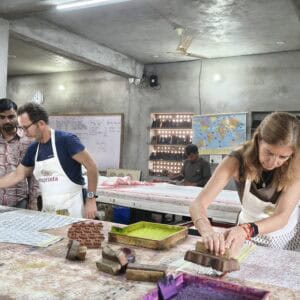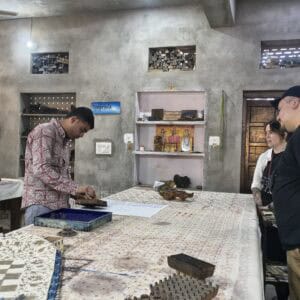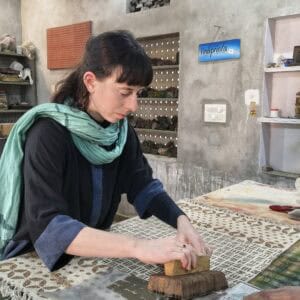
A hand block pigment-printed tote bag made in Bagru — the kind of piece you’ll take home from a one-day workshop.
If you’ve ever wanted to try block printing but worried it looked too complicated for a first-timer — mud pastes, dye baths, waiting days for a pattern to reveal itself — there’s good news. There’s one technique in Bagru that skips almost all of that, and it’s exactly where most beginners start: pigment printing.
At Anaprinta, our studio in Bagru, Jaipur, this is the very first technique most of our visitors learn, and for good reason. It’s direct, it’s quick to understand, and you can see your design appear on fabric within minutes, not days. In this blog, we’re breaking down what pigment printing is, how it fits among the many textile printing techniques practiced in India, how it’s different from other Bagru techniques like dabu and indigo, and why it’s the perfect block printing technique for beginners — whether you’re a curious traveler, a design student, or someone just looking for a hands-on day out near Jaipur.
Table of Contents
- What Is Pigment Printing?
- What Is a Pigment Print, Exactly? Pigment vs Dye Explained
- Pigment Printing vs Dabu vs Indigo — Where It Fits in Bagru’s Craft Tradition
- The Pigment Printing Process, Step by Step
- Why Pigment Printing Is the Perfect Craft for Beginners
- Learning Pigment Printing at Anaprinta
- What a Workshop Day Looks Like
- Tips for First-Timers
- Final Thoughts
- Frequently Asked Questions
What Is Pigment Printing?
Pigment printing is the most straightforward form of hand block printing practiced in Bagru. Instead of dipping fabric into a dye bath or using a mud-resist paste like in dabu printing, artisans mix pigment color paste directly and print it straight onto the fabric using hand-carved wooden blocks. What you print is what you get — no waiting for a chemical reaction, no washing away layers to reveal a hidden pattern.
In simple words, if someone asks you “what is a pigment printing” technique, the easiest answer is this: it’s block printing without dye — color goes on top of the fabric surface and sets there, rather than soaking into the fibers through a dyeing process. Among the many textile printing techniques used across India — screen printing, digital printing, dyeing, and hand block printing — pigment printing remains one of the oldest and most hands-on, which is exactly why it still thrives in a craft town like Bagru.
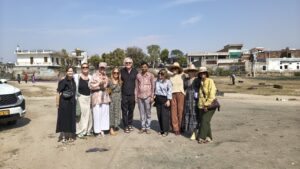
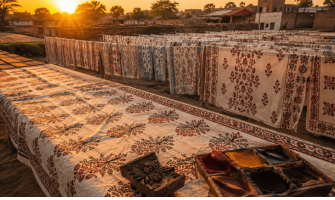
This is also the technique used in Bagru’s famous “Fields of Color” — the open stretches where freshly pigment-printed fabric is laid out to dry under the sun, one of the most photographed sights for anyone visiting Bagru.
What Is a Pigment Print, Exactly? Pigment vs Dye Explained
To really understand pigment printing on fabric, it helps to know the difference between a pigment and a dye:
- Dyes are absorbed into the fibers of the fabric through a chemical process, usually involving a dye bath, heat, or a mordant. This is what happens in indigo dyeing.
- Pigments sit on the surface of the fabric. They’re mixed with a binder that helps them stick to the cloth, which is why this method is often called pigment-based ink printing in the wider textile world.
Because pigment sits on the surface rather than penetrating the fabric, the process is faster and far easier to control — which is exactly why it’s the first technique taught to beginners at almost every Bagru workshop, including ours.
Pigment Printing vs Dabu vs Indigo — Where It Fits in Bagru’s Craft Tradition
Bagru is home to several block printing techniques, and it’s easy to mix them up if you’re new to the craft:
- Pigment printing — color paste is printed directly onto fabric with a block. No dye bath, no resist, no fermentation. The simplest and quickest to learn.
- Dabu printing — a mud-resist technique where mud paste blocks certain areas from dye, revealing a pattern only after washing. (We’ve covered this in detail in our blog on the dabu printing process, if you want to go deeper into that one.)
- Indigo dyeing — fabric is repeatedly dipped into a natural indigo vat, building color in layers through oxidation.
If you’re planning your first hand block printing workshop and wondering where to start, pigment printing is almost always the right entry point. It teaches you the fundamentals — block handling, pressure, alignment, color mixing — without the added complexity of resists or dye chemistry. Once you’re comfortable with pigment work, techniques like dabu and indigo make a lot more sense.
The Pigment Printing Process, Step by Step
Here’s what actually happens when a piece of fabric goes from plain cotton to a finished, pigment-printed piece.
Step 1: Preparing the Fabric
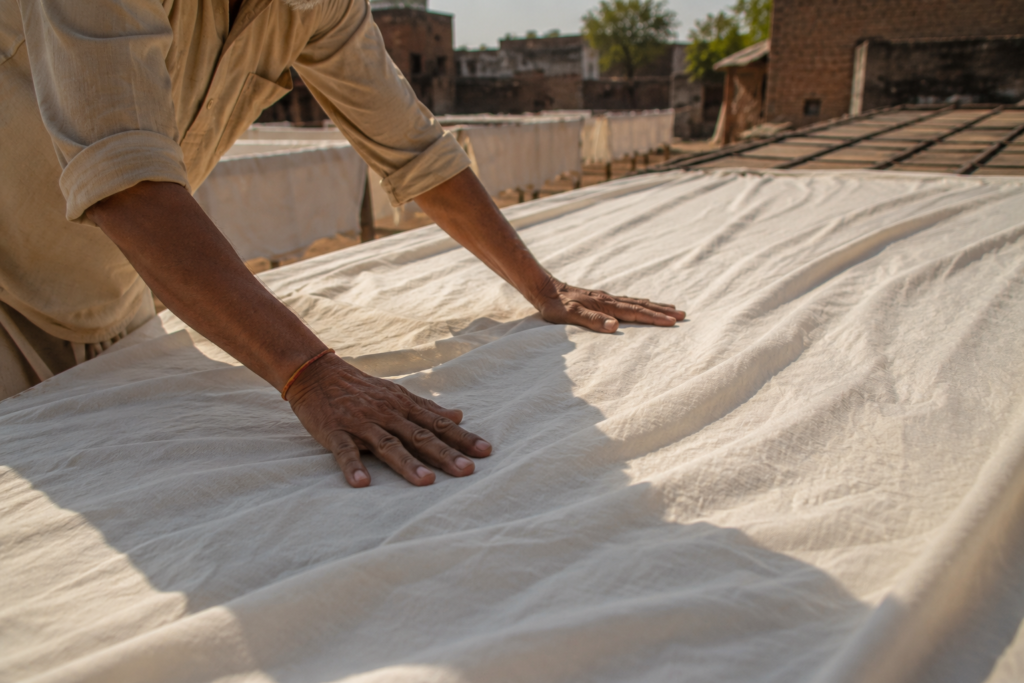
Just like every other Bagru technique, the raw cotton fabric is first washed to remove starch and impurities, then left to dry fully in the sun. Clean, dry fabric absorbs the pigment paste evenly.
Step 2: Choosing the Block
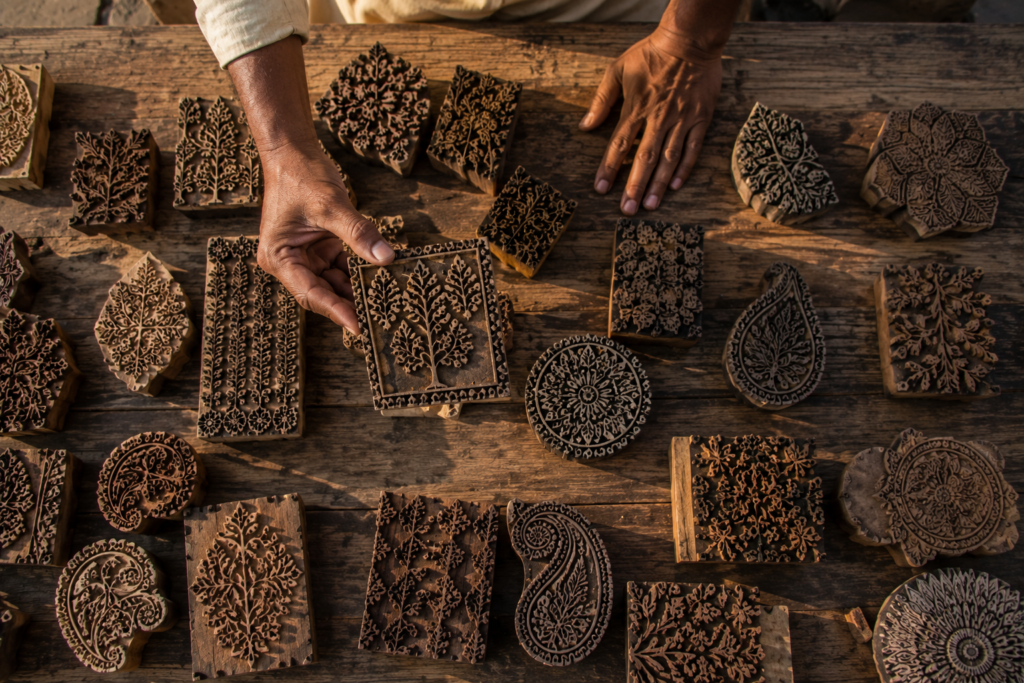
Artisans select a hand-carved wooden block based on the motif — florals, borders, geometric patterns, or traditional Bagru designs. For beginners, simpler single-block designs are usually recommended to start.
Step 3: Mixing the Pigment Paste
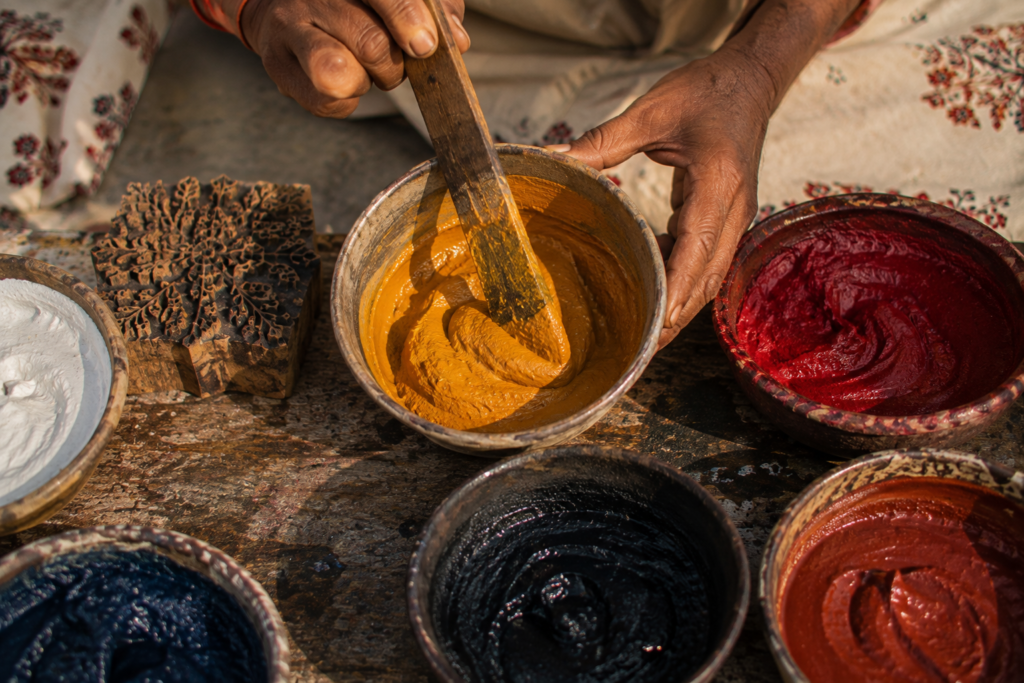
The pigment color is mixed with a binder and a thickening agent to create a smooth, printable paste — this is the pigment-based ink that gives the technique its name. Getting the right consistency matters: too thin and the print smudges, too thick and it won’t transfer cleanly from the block.
Step 4: Printing the Design
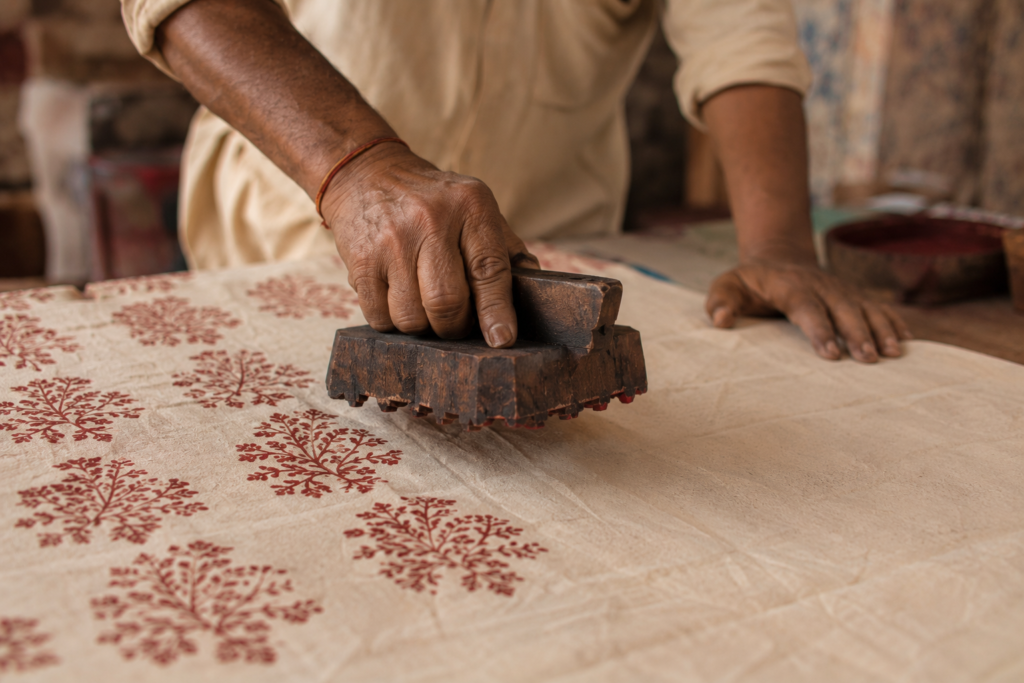
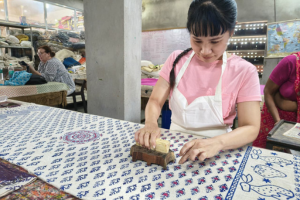
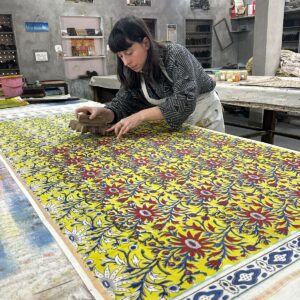
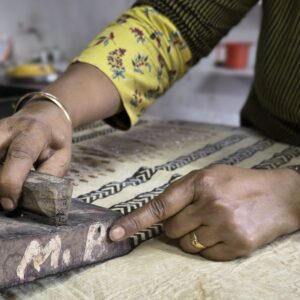
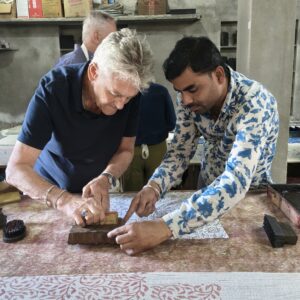
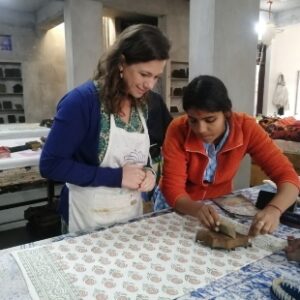
The block is dipped into the pigment paste and pressed firmly onto the fabric by hand, repeated across the length of the cloth. Because there’s no resist or dye step afterward, you can literally see your finished design appearing in real time — which is what makes this technique so satisfying for someone printing for the very first time.
Step 5: Drying and Curing
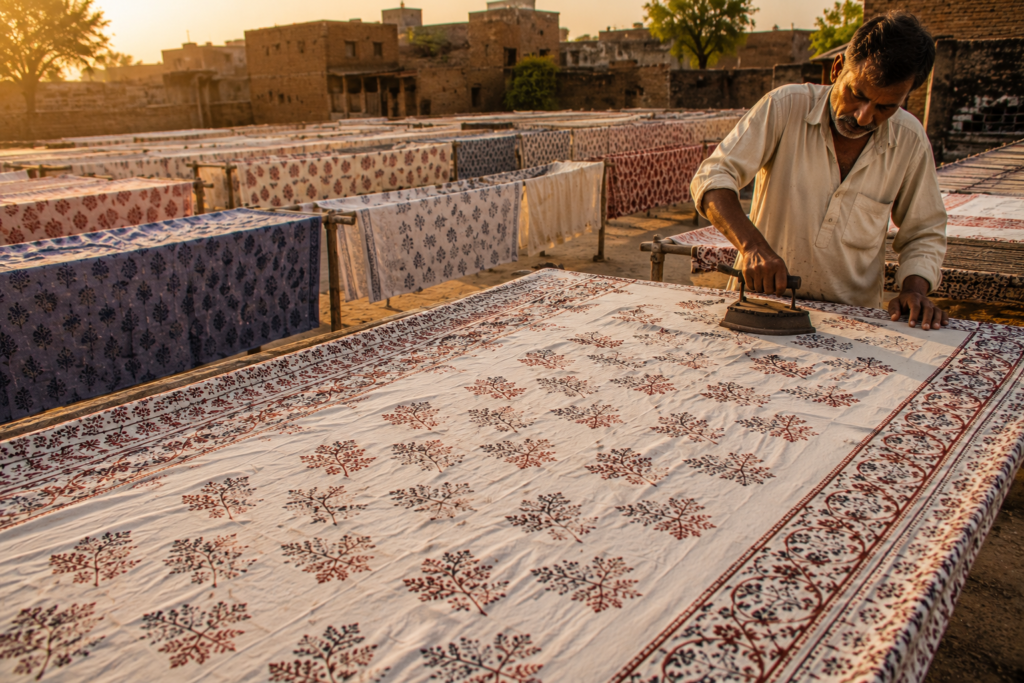
Once printed, the fabric is dried, usually under the sun in Bagru’s open “Fields of Color,” and then heat-cured (traditionally with ironing) to help the pigment bind to the fibers. Unlike dye-based techniques, pigment printing doesn’t need an afterwash to fix the color — curing alone locks it in place.
Step 6: Final Finishing
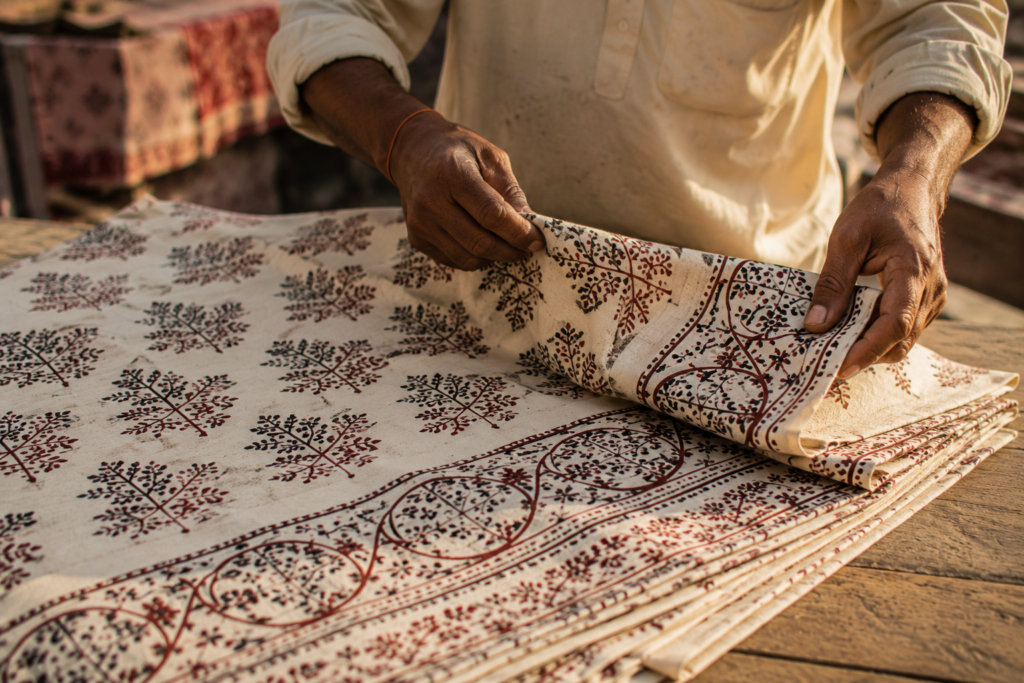
A final quality check and light trimming complete the process, leaving you with a fabric piece that’s ready to use, wear, or display — all done within a single day.
Why Pigment Printing Is the Perfect Craft for Beginners
If you’re searching for block printing techniques for beginners, pigment printing checks almost every box:
- No prior experience needed — the technique itself is simple to grasp within the first few minutes of guidance.
- Instant results — you see your design the moment you lift the block, unlike dabu or indigo, where the final pattern only reveals itself days later.
- Low risk of mistakes — because there’s no dye bath or resist paste involved, there’s less that can go wrong for a first-timer.
- Completed in one sitting — most block printing workshops built around pigment printing can be finished in a single day, making it perfect for travelers with limited time in Jaipur.
- A strong foundation — once you understand block handling and pressure with pigment printing, moving on to dabu or indigo later becomes much easier.
This is exactly why pigment printing forms the core of introductory workshops across Bagru, including our own.
Learning Pigment Printing at Anaprinta
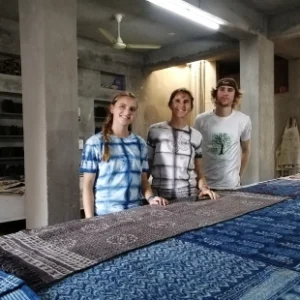
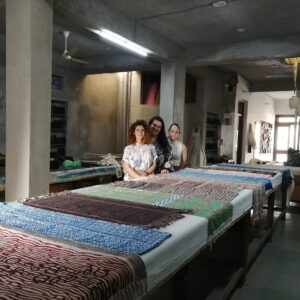
At Anaprinta, our One-Day Workshop (₹3,000 per person) is built specifically around hand block pigment printing — it’s designed as a true beginner’s introduction to Bagru’s craft, with no experience required.
Through the session, you’ll:
- Get an introduction to block printing tools and the pigment technique
- Walk through Bagru’s iconic “Fields of Color,” where hand-printed fabric dries under the open sky
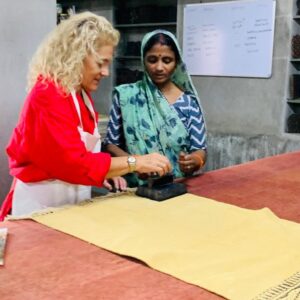
- Learn hand pressure, block alignment, and color mixing directly from expert artisans
- Print your own tote bag, scarf, bandana, or rug to take home
- Enjoy a traditional local lunch as part of the day
If you’d like to go a step further, our One-Day Workshop 2.0 (₹5,000) combines pigment printing with eco-printing in the same session, and our Four-Day Workshop (₹15,000) takes you through all four Bagru printing methods — pigment, natural, resist, and Jahota/Shibori — for anyone who wants to master the craft in depth. You can see the full breakdown on our workshops page.
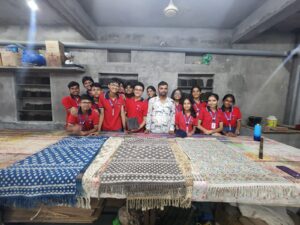
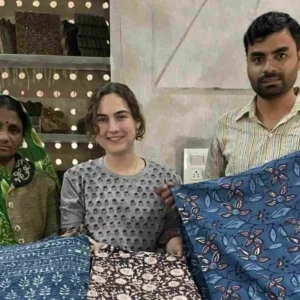
Unlike a factory demonstration, you’re printing alongside real artisans in the same courtyards their families have worked in for generations — using the same wooden blocks and pigment techniques passed down through the Chippa community of Bagru.
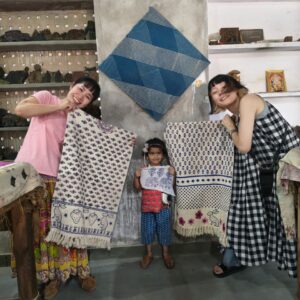
Show Image A pigment-printed scarf, styled the way many of our workshop guests wear their finished piece long after they’ve left Bagru.
What a Workshop Day Looks Like
Wondering what an actual pigment printing workshop day feels like at Anaprinta? Here’s a general idea:
- Morning welcome — Arrive at our Bagru studio and meet the artisans who’ll guide you through the day.
- Introduction to pigment printing — A short, simple explanation of pigment paste, blocks, and technique before you start.
- Hands-on printing — Choose your block design and start printing your own fabric piece under expert guidance.
- Fields of Color walk — A guided walk through Bagru’s open drying fields, where fabric from ongoing prints is laid out in the sun.
- Lunch — A traditional local meal, with time to chat with the artisans about their craft and daily life in Bagru.
- Take your piece home — By the end of the day, you’ll walk away with a finished, hand-printed piece made entirely by you.
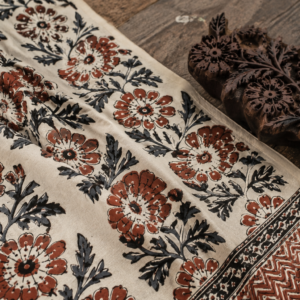
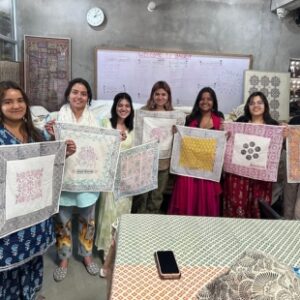
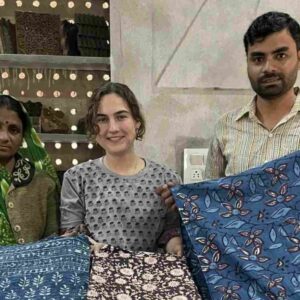
Show Image Different pigment-printed motifs made by past workshop guests — no two prints ever turn out exactly alike.
Tips for First-Timers
If this is your first time trying pigment printing, a few things will help:
- Wear clothes you don’t mind getting a little stained. Pigment paste can leave marks, and that’s part of the process.
- Don’t worry about perfect alignment. Slight imperfections are what make hand-printed fabric special — no two prints are ever identical.
- Start with a simple block design. Save the more intricate multi-block patterns for once you’re comfortable with the basics.
- Ask the artisans questions. They’ve spent years perfecting this craft and enjoy sharing the stories behind their motifs.
- Book ahead during peak season (October to March), when Jaipur’s cooler months bring more visitors to Bagru.
Final Thoughts
Pigment printing proves that you don’t need years of practice to create something beautiful with your own hands — just the right guidance and a willingness to get a little messy. It’s simple enough for a complete beginner, yet rooted in a craft tradition that’s been practiced in Bagru for generations.
If you’re planning a trip to Jaipur and want a hands-on introduction to hand block printing, we’d love to have you at Anaprinta. Come spend a day with us, print your own piece, and take home more than just fabric — take home a story. And if you’re curious about exploring further into Bagru’s other traditions, our blog on the dabu printing process and why every traveler should join a hand block printing workshop in Bagru are great next reads.
Book Your Pigment Printing Workshop with Anaprinta →
You can also follow our day-to-day workshop moments and artisan stories on Instagram @anaprinta.
Frequently Asked Questions
1. What is a pigment printing technique? It’s a hand block printing method where pigment color paste is printed directly onto fabric using wooden blocks. Unlike dyeing, the color sits on the surface of the fabric rather than being absorbed into the fibers.
2. What is the difference between pigment printing and dye printing? Dyes chemically bond with fabric fibers, usually through a dye bath, and often need a mordant to set. Pigments are mixed with a binder and sit on the surface of the fabric, making the process quicker and simpler to control.
3. Is pigment printing a good technique for complete beginners? Yes. Because there’s no dye bath or resist paste involved, pigment printing is considered the easiest entry point into Bagru’s block printing traditions, and it’s usually the first technique taught in beginner workshops.
4. How long does a pigment printing workshop take? Most pigment printing workshops, including Anaprinta’s One-Day Workshop, are completed in a single day — typically from morning until early afternoon, including lunch.
5. Where can I learn pigment printing near Jaipur? Anaprinta’s studio in Bagru, about 30 km from Jaipur, offers hands-on pigment printing workshops for beginners, along with longer multi-day sessions covering other traditional techniques like dabu and indigo dyeing.
6. Does pigment-printed fabric fade quickly? When properly cured and cared for (gentle washing, avoiding harsh scrubbing), pigment-printed fabric holds its color well for regular use, though it’s best hand-washed separately to preserve the print quality.
7. What can I make in a pigment printing workshop? At Anaprinta, most beginners print a tote bag, scarf, bandana, or small rug during a one-day session — simple enough to finish in a single sitting while you’re still learning the technique.
8. Is pigment printing safe and eco-friendly? At Anaprinta, we use azo-free pigment dyes that are skin-safe and better for the environment compared to synthetic, chemical-heavy alternatives — in line with the same natural, artisan-led approach used across our other Bagru printing techniques.