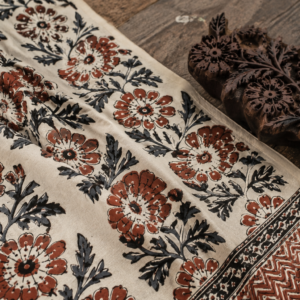
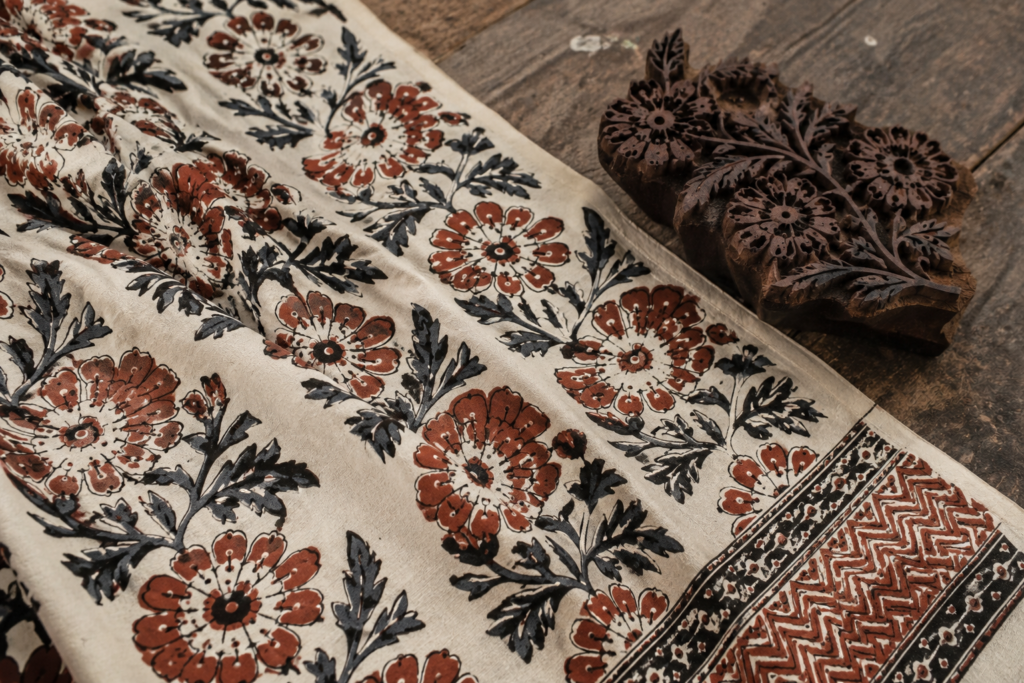
If you’ve ever held a piece of fabric with deep black outlines and warm brick-red fills, and wondered how something so bold could be made without a single drop of synthetic ink, you’ve probably been looking at syahi begar printing. It’s one of the oldest and least talked-about crafts of Bagru.
Most people who visit Jaipur have heard of Bagru’s mud-resist dabu prints or Sanganer’s delicate floral motifs. Fewer people know about syahi begar, even though it’s one of the oldest surviving styles of traditional Rajasthan textile craft still practised by hand today. At Anaprinta, our hand block printing workshop in Bagru covers this exact craft. In this blog, we’re breaking down what syahi begar actually is, how it’s made, and why it deserves a lot more attention than it currently gets.
Table of Contents
- What Is Syahi Begar Printing?
- Bagru, Sanganer and Jaipur — Three Different Printing Traditions
- The Syahi Begar Printing Process, Step by Step
- Syahi Begar vs Dabu Printing: What’s the Difference?
- Why Syahi Begar Matters for Students and Designers
- Why This Craft Is Slowly Disappearing
- Learn Syahi Begar at Anaprinta’s Workshop
- What a Workshop Day Looks Like
- Tips for First-Timers
- Final Thoughts
- FAQs
What Is Syahi Begar Printing?
Syahi begar printing is a traditional two-colour hand block printing technique native to Bagru, a small town about 30 km from Jaipur. The name comes from its two core ingredients: syahi, the black dye, and begar, the reddish-brown dye. Together, these two colours create the deep, earthy motifs that Bagru has been known for over the last 300-plus years.
Unlike mud-resist dabu printing, where a paste blocks the dye from reaching the fabric, syahi begar is a direct printing technique. Both colours are printed straight onto the cloth using hand-carved wooden blocks, one after the other, to slowly build up the final design.
Along with dabu, syahi begar is considered one of the two signature styles of bagru hand block printing, practised for generations by the Chhipa community, the artisan families who have called Bagru home for over 300 years. Historically, syahi begar was also common in nearby printing centres like Bagh in Madhya Pradesh and Tarapur, though Bagru remains the most active hub for it today.
Who Keeps Syahi Begar Alive Today
This craft isn’t taught in institutes or documented in manuals. It’s passed down inside families, from one generation of printers to the next. The Chhipa community in Bagru has practised natural dye hand block printing for centuries, and even today, most syahi begar workshops in the area are run out of home courtyards rather than commercial factories. Every artisan family tends to have its own small variations in how they prepare the syahi. Some ferment it longer, some add slightly different proportions of jaggery, and that’s part of why no two workshops, or two artisans, produce identical results.
Bagru, Sanganer and Jaipur — Three Different Printing Traditions
People often lump Bagru, Sanganer and Jaipur’s printing together, but each has its own personality.
- Bagru is home to earthy, deep-toned prints. Syahi begar and dabu both come from here, and the colour palette leans toward blacks, rusty reds, and indigo blues on off-white or cream backgrounds.
- Sanganer is known for the opposite look: fine, delicate floral motifs printed on a crisp white background, often with a lighter, more decorative feel influenced by the Mughal courts.
- Jaipur city itself acts more as the trading and design hub. Many finished pieces from both Bagru and Sanganer are sold, styled, and exported from Jaipur, even though the actual printing happens in the smaller towns nearby.
Knowing this difference matters if you’re a design student, a buyer, or just someone planning a trip — because “Jaipur block printing” as a phrase often hides which actual village and technique you’re really looking at. If you’re shopping for fabric or planning to visit a workshop, asking specifically whether it’s a Bagru, Sanganer, or Dabu print will get you a much more accurate answer than just asking for “Jaipur prints.”
The Syahi Begar Printing Process, Step by Step
Making a single length of syahi begar fabric involves several stages, and every one of them is still done by hand in Bagru.
Step 1: Washing and Preparing the Fabric
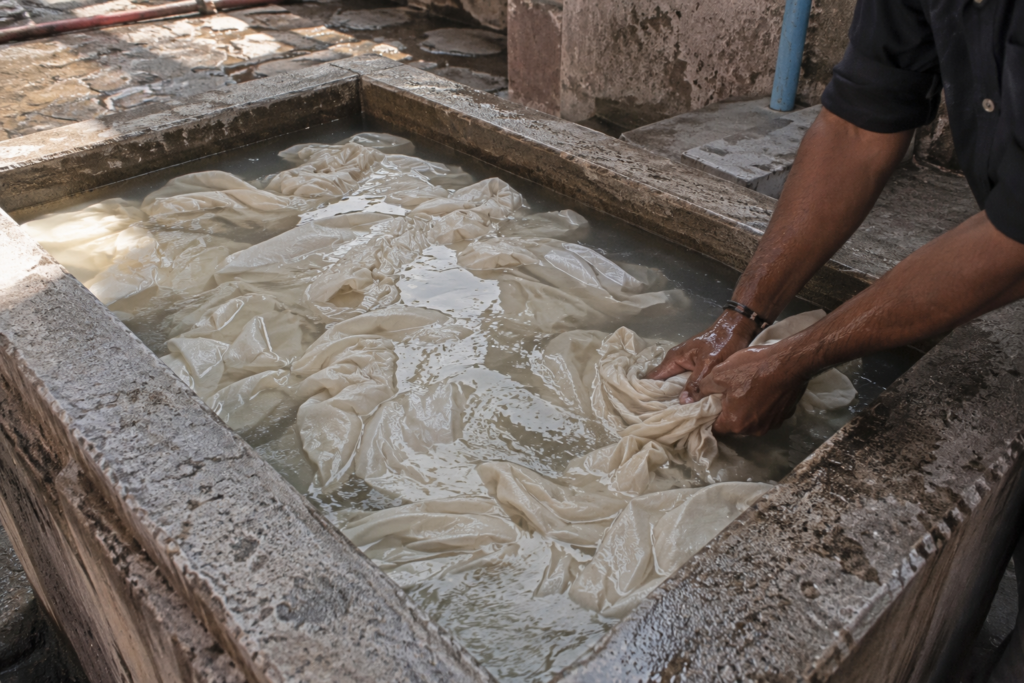
The raw cotton, known locally as kora cloth, is first washed to remove starch and natural oils, then left to dry completely in the open. This step matters more than it looks. Any leftover residue on the cloth can stop the dye from binding evenly later, leaving patchy or uneven colour once the fabric is finished.
Step 2: Treating the Fabric with Harda
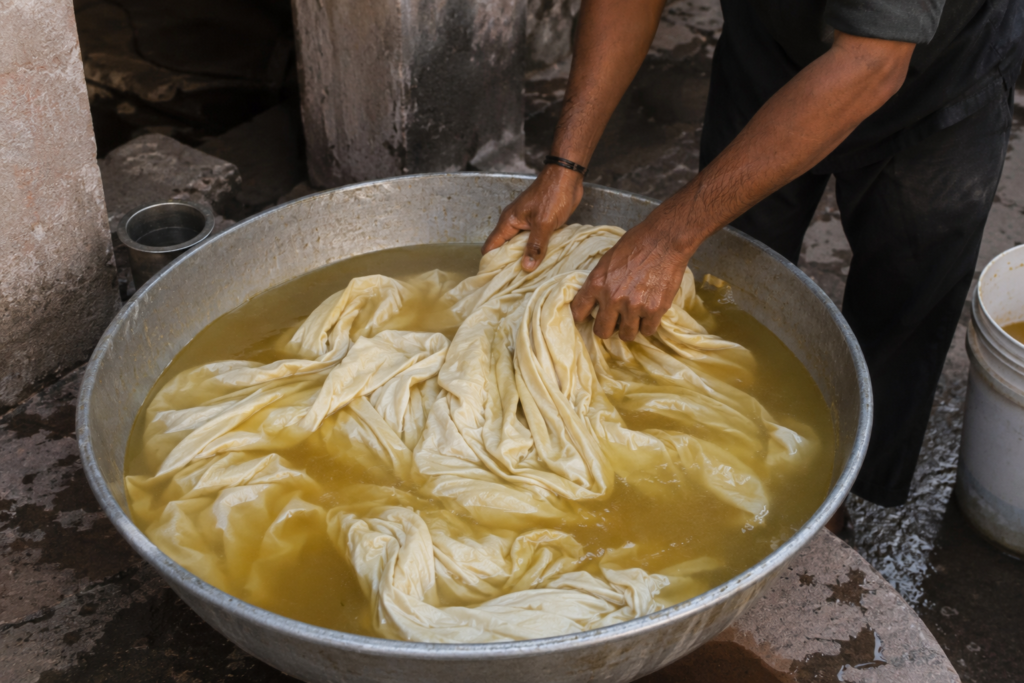
Once clean, the fabric is treated with a harda mordant, a powder made from myrobalan fruit, mixed with water. This gives the cloth a faint yellow tint and creates the surface the black and red dyes will actually bond to. Without this step, neither syahi nor begar would hold onto the fabric properly.
Step 3: Preparing the Syahi (Black Dye)
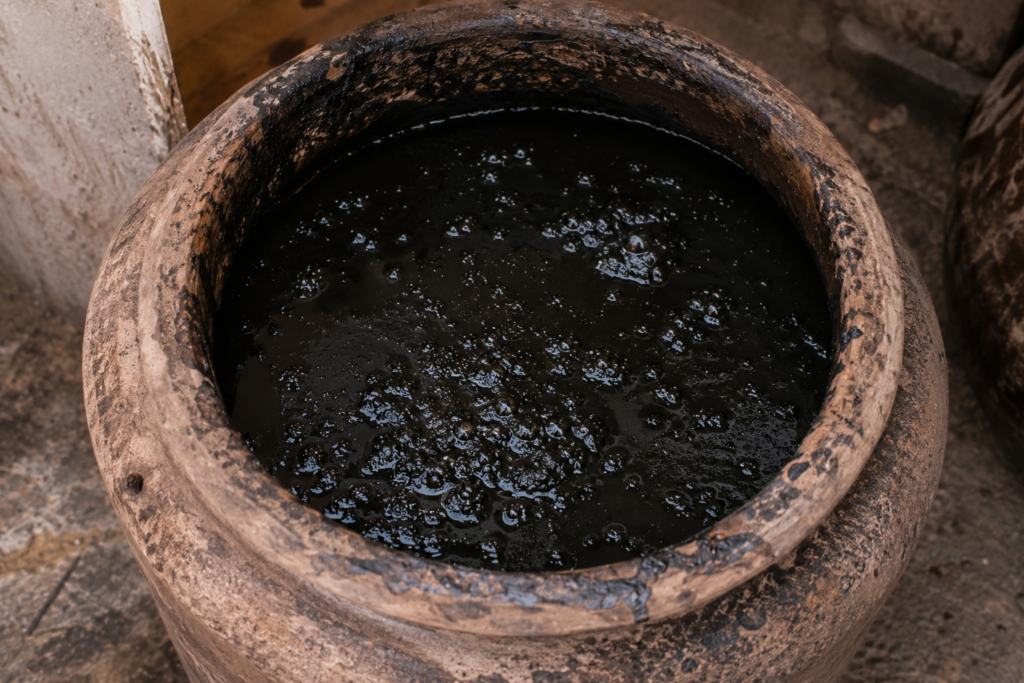
Syahi is made by fermenting rusted iron scraps with jaggery and water in an earthen pot, sometimes for weeks. In summer this can take 10 to 15 days, while winter’s cooler temperatures can stretch it closer to six weeks. The mixture is later thickened with tamarind seed powder and gum so it can be printed cleanly with a wooden block, without bleeding into the fabric.
Step 4: Preparing the Begar (Red Dye)
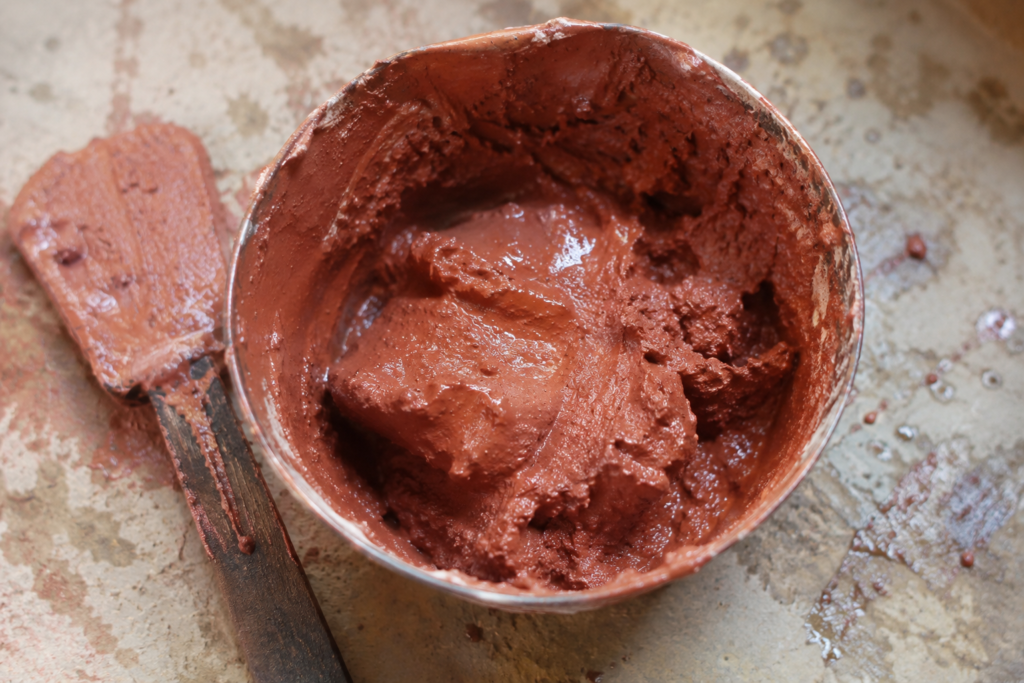
Begar is a mordant paste made from alum, a little red ochre (geru), and natural tree gum, usually from the acacia or babool tree. On its own, it looks pale and unremarkable. Its rusty red colour only shows up fully once the fabric goes through a later dyeing and boiling stage, when the alum reacts with natural dye to produce that signature terracotta-red.
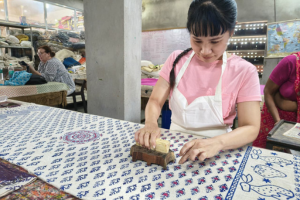
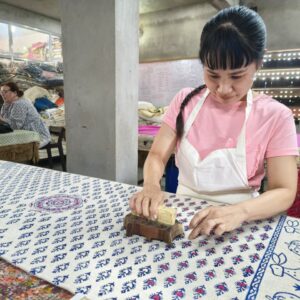
Step 5: Block Printing the Outline
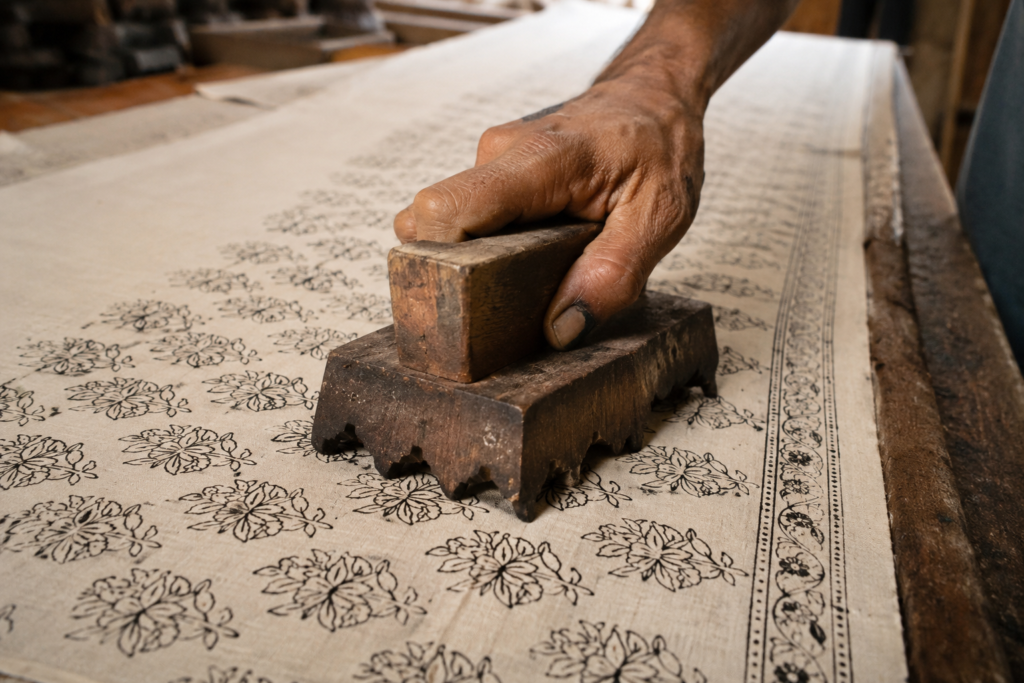
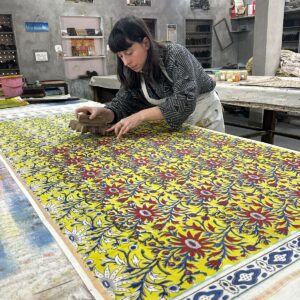
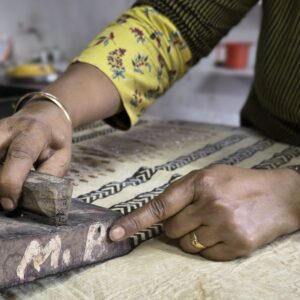
The artisan first prints the black outline using a carved wooden block known locally as the datta. This forms the skeleton of the design — every leaf, flower, or geometric pattern starts here.
Step 6: Filling in the Begar
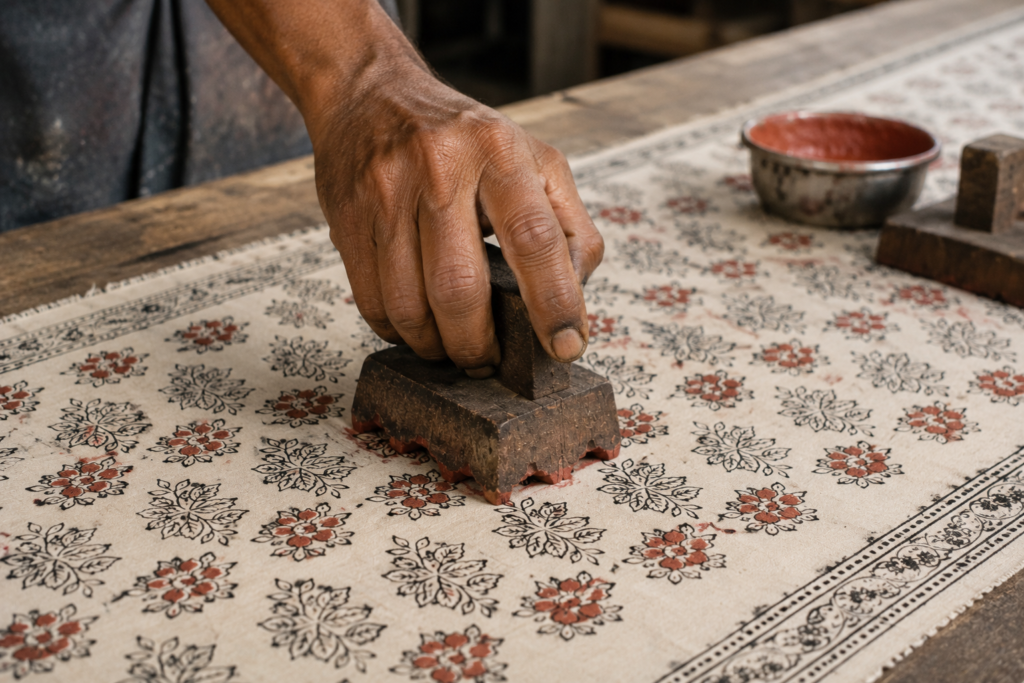
Once the black outline is set, a second block is used to fill in the red sections within that outline. Lining this up by eye, without smudging the first colour, is where an artisan’s years of practice really show. A single misaligned stamp can throw off an entire length of fabric, so most printers work in a steady, practised rhythm built over years, not months.
Step 7: Dyeing and Boiling
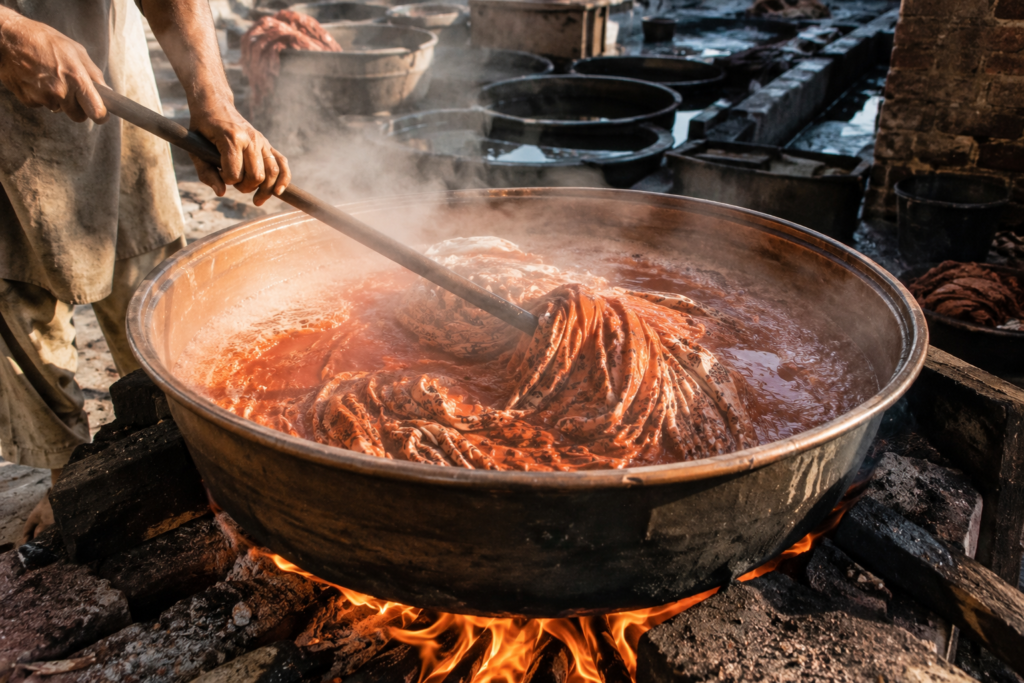
The printed fabric is then dyed and boiled in large copper vats, often using natural alizarin, which reacts with the mordants already sitting in the fabric to develop the final black and red shades fully.
Step 8: Washing and Sun-Drying
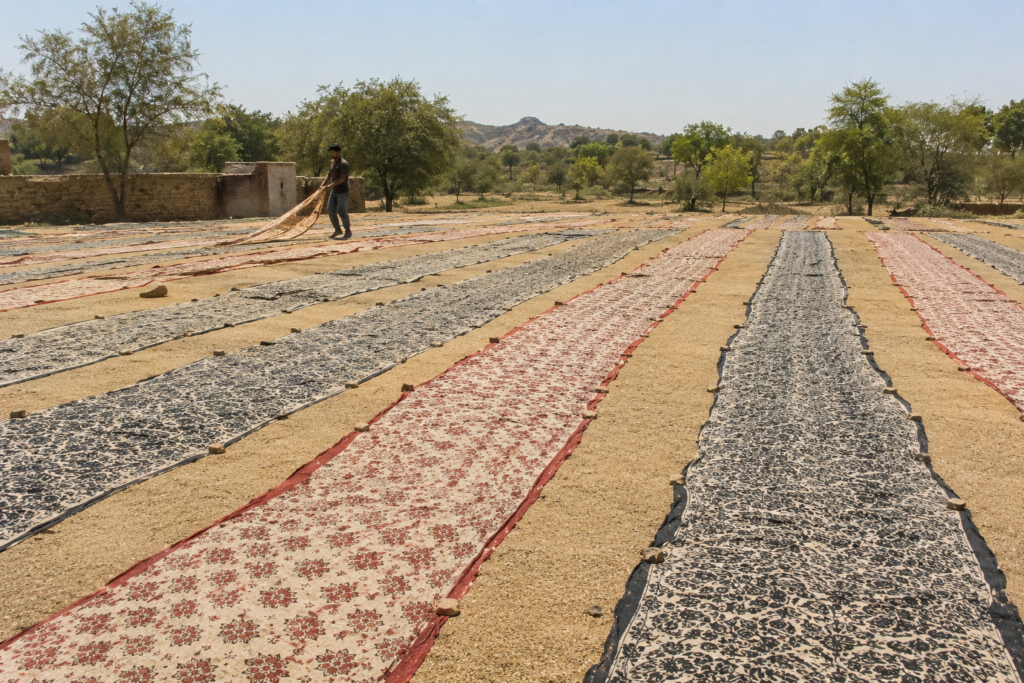
The last step is a thorough wash to remove excess dye and gum, followed by drying under the open Rajasthan sun. Fabric is typically laid out across large open fields near the workshops. This final dry is what gives syahi begar fabric its slightly rustic, handmade texture, since every piece dries at a slightly different rate depending on the weather that day.
Syahi Begar vs Dabu Printing: What’s the Difference?
This is one of the most common questions we get from visitors and design students at our workshops, so it’s worth clearing up.
- Syahi begar is a direct printing technique. Colour goes straight onto the fabric using blocks.
- Dabu is a resist technique. A mud paste is printed first to block dye from certain areas, and the pattern only appears once that mud is washed away.
Many pieces you’ll see from Bagru today actually combine both, a syahi begar outline with dabu resist work elsewhere on the same fabric, which is part of what makes Bagru’s printing tradition so layered compared to single-technique crafts elsewhere.
Why Syahi Begar Matters for Students and Designers
If you’re a textile design student or someone studying printed textiles, syahi begar is worth understanding beyond the theory in your syllabus. It’s one of the clearest real-world examples of mordant chemistry in action — the same reaction between iron, alum, and natural dye that most design courses cover on paper is happening right in front of you in an artisan’s courtyard.
For small business owners and printing units exploring natural dye hand block printing for their own product lines, syahi begar also offers something machine printing can’t fake: real texture variation and a design story rooted in a specific place. Buyers today increasingly ask where and how a fabric was actually made, and being able to explain a technique like syahi begar, or even show a workshop video or photo from Bagru, adds credibility to a product line.
Why This Craft Is Slowly Disappearing
Syahi begar takes far longer and costs more to produce than machine-printed alternatives, and fewer young artisans in Bagru are choosing to continue the trade. Fermenting syahi alone can take weeks, and getting the begar-to-red transformation right requires years of hands-on experience that isn’t written down anywhere. It’s passed from one generation of printers to the next.
This is exactly why hands-on exposure matters. The more people who actually see and try this process, the more reason artisan families have to keep teaching it forward instead of letting it fade out.
Learn Syahi Begar at Anaprinta’s Workshop
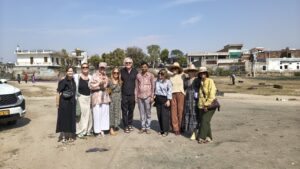
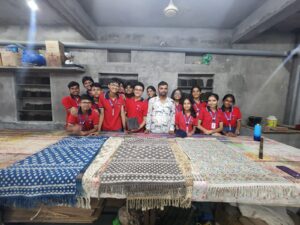
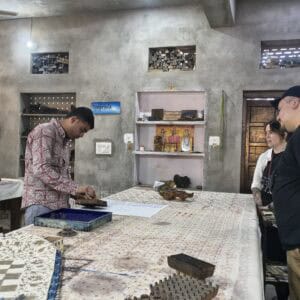
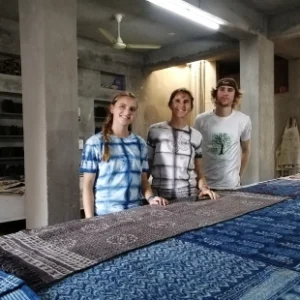
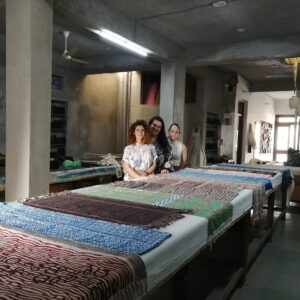
At Anaprinta, our studio sits right in Bagru, inside the same lanes where this craft has been practiced for centuries. Our Two-Day Workshop is built specifically around natural inks and traditional dyeing. You’ll work directly with syahi-begar, learn the mordant and boiling process firsthand, and also get introduced to indigo and kashish (ferrous sulphate) dyeing along the way.
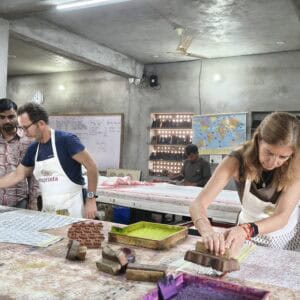
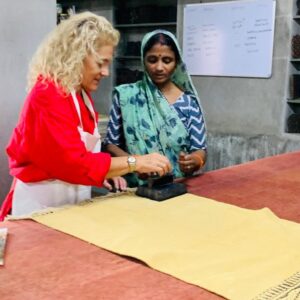
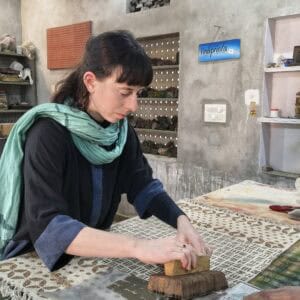
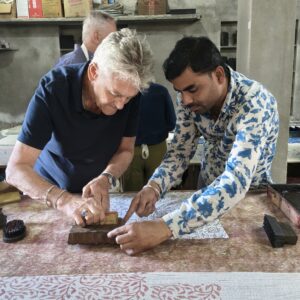
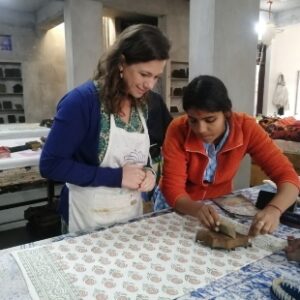
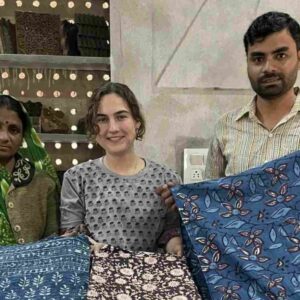
You won’t just be watching a demonstration from a distance. You’ll be standing at the printing table, block in hand, guided by artisans who’ve been doing this since childhood, the same people whose families have kept this craft alive for generations.
Whether you’re a textile design student trying to understand mordant chemistry beyond a textbook, or a small business owner exploring black and red block printing Bagru for your own product line, seeing the process up close changes how you think about the fabric completely.
What a Workshop Day Looks Like
- Morning welcome — Arrive at our Bagru studio and get introduced to the tools, blocks, and dyes you’ll be working with.
- Understanding the mordants — Learn how harda, syahi, and begar are prepared, and why each step exists.
- Hands-on block printing — Print your own outline and fill-in work directly onto fabric, guided by an artisan.
- Dyeing and boiling demonstration — Watch (or help with) the natural dye bath that brings the final colours to life.
- Lunch with the artisans — Most of our workshops include a home-style meal and time to talk with the printers themselves.
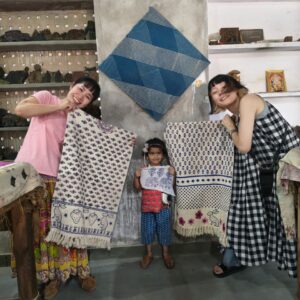
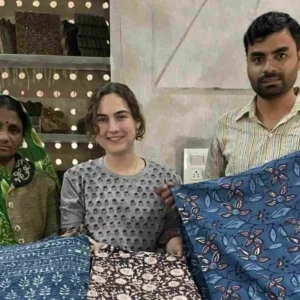
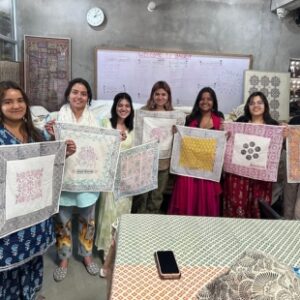
- Take your piece home — Walk away with a fabric you printed with your own hands.
Tips for First-Timers
If this is your first time trying syahi begar printing, a few small things will make the day go smoother.
- Wear old clothes. Natural dyes and mordant pastes stain, and that’s genuinely part of the experience.
- Don’t chase perfection. Every hand-printed piece has small imperfections — that’s what separates it from a machine print.
- Ask about the ingredients. Our artisans enjoy explaining what goes into syahi and begar, and the stories behind each motif.
- Book ahead during Jaipur’s cooler months (October to March), when workshop slots fill up fastest.
- Bring a bag for your finished fabric so you can carry it home safely.
Final Thoughts
Syahi begar printing is one of those crafts that rarely gets the spotlight, even though it’s quietly behind so much of what people love about Bagru’s textiles. It’s slow, it’s technical, and it depends entirely on artisans who’ve spent years learning exactly how much iron, jaggery, and alum it takes to get the colour right. Reading about a mordant reaction is one thing. Watching an artisan judge it entirely by eye, colour, and smell is a completely different kind of understanding, the sort you can only really get by standing next to the printing table yourself.
If you want to actually understand this craft rather than just read about it, come spend a day with us in Bagru. You’ll leave with a fabric you made yourself, and a much clearer picture of why this technique has survived for over 300 years.
Book your Hand Block Printing Workshop with Anaprinta →
If you’re curious about mud-resist printing too, check out our detailed guide on the Dabu Printing Process, or read about why every traveler should join a hand block printing workshop in Bagru.
You can also follow our day-to-day workshop moments and artisan stories on Instagram @anaprinta.
Frequently Asked Questions
1. What is syahi begar printing? It’s a traditional direct block printing technique from Bagru that uses two natural colours — syahi (black, made from iron and jaggery) and begar (a red-brown mordant paste made from alum) — to create bold, earthy patterns on fabric.
2. Is syahi begar the same as dabu printing? No. Syahi begar is a direct printing technique where colour is printed straight onto the fabric. Dabu is a resist technique, where a mud paste blocks dye from reaching certain areas until it’s washed away.
3. Where can I learn syahi begar printing near Jaipur? Anaprinta’s studio in Bagru, about 30 km from Jaipur, offers a hands-on hand block printing workshop where you can learn syahi begar, natural dyeing, and mordant preparation directly from artisans.
4. Do I need any prior experience to join? Not at all. Our workshops are designed for complete beginners, including textile students, travelers, and small business owners exploring natural dye printing for the first time.
5. How long does it take to make syahi begar fabric? From fermenting the syahi to the final wash and sun-dry, the full process can take anywhere from a couple of weeks to over a month, largely because of how long the black dye needs to ferment properly — around 10 to 15 days in summer, and closer to six weeks in winter.
6. Is syahi begar printing eco-friendly? Yes. Every core ingredient, iron, jaggery, alum, tree gum, and natural mordants, comes from natural sources, which makes syahi begar a truly sustainable form of natural dye hand block printing, free of synthetic chemicals at every stage.