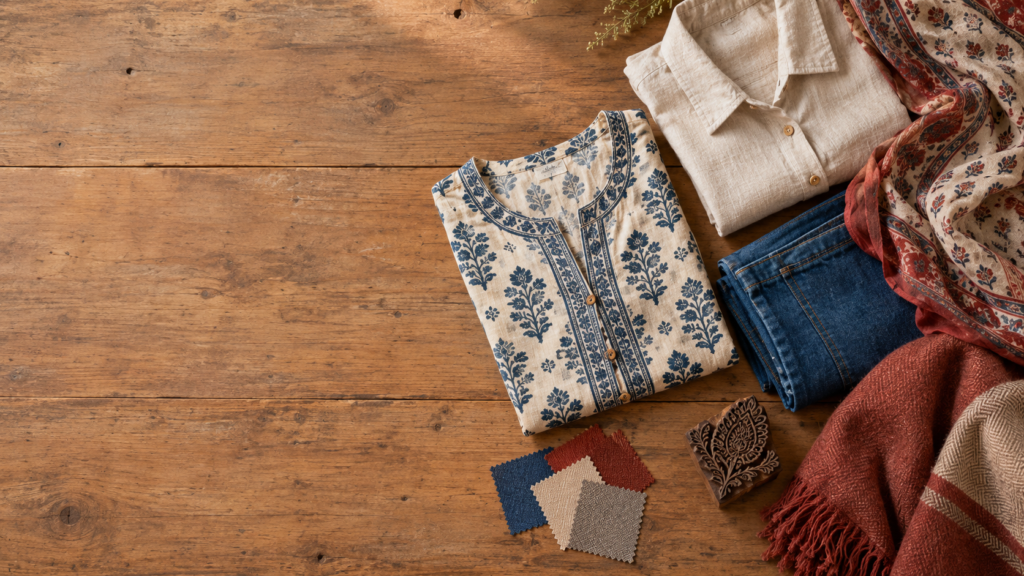
Open your wardrobe for a second. You can probably point to a shirt, a kurta, a pair of jeans. But can you say what each one is made of, and why it feels the way it does? Most of us can’t, and that is a very normal place to start.
This guide walks you through the main types of clothes, the fabrics behind them, and the little details (weave, weight, texture) that decide whether a garment feels like a second skin or a mistake you keep in the cupboard. By the end, you will be able to read a label, look at a piece of cloth and say, with some confidence, what you are holding.
We are not writing this from a textbook. At Anaprinta, our studio in Bagru near Jaipur, we work with cotton, natural dyes and hand-carved wooden blocks every single day. The team is led by fifth-generation block printer Anup Chhipa, and you can read more about the family on our About Us page. Everything below comes from what we see, touch and print on the studio floor, plus a proper look at what the top-ranking guides on this topic cover.

What Are the Different Types of Clothes?
Clothes, clothing, apparel and garments all mean the same thing: wearable items made from fabric or other materials. The words change by country. In the US you will hear types of apparel and types of clothing more often, while in India people usually search for types of clothes or ask for the cloth by its material name.
The simplest way to sort the different types of clothes is to pick one of three lenses:
- By occasion: casual, formal, traditional, sportswear, loungewear, nightwear and outerwear.
- By wearer: menswear, womenswear, kidswear and baby clothing.
- By body part: tops, bottoms, one-piece outfits, innerwear and layers like jackets or shawls.
Most shopping sites mix all three, which is why the same kurta can show up under “women’s ethnic wear”, “casual wear” and “cotton tops” at once. Once you know which lens you are using, the confusion mostly disappears.
Types of Clothing by Occasion
This is the most useful way to think about types of clothing, because it ties the garment to the life you actually live. Here is a quick map.
| Type | Common garments | Fabrics that work best | Where you wear it |
|---|---|---|---|
| Casual wear | T-shirts, jeans, shirts, kurtas, dresses | Cotton, denim, jersey | Everyday, college, weekends |
| Formal wear | Suits, blazers, dress shirts, sarees, formal dresses | Wool blends, crepe, silk, gabardine | Office, interviews, weddings |
| Traditional and ethnic wear | Kurta, saree, lehenga, salwar suit, dupatta | Cotton, silk, chanderi, hand block printed cotton | Festivals, family functions, daily wear in India |
| Sportswear | Track pants, leggings, sports tees | Polyester, nylon, spandex blends | Gym, running, yoga |
| Loungewear and nightwear | Pyjamas, joggers, nightdresses | Soft cotton, modal, jersey | At home, sleep |
| Outerwear | Jackets, coats, shawls, sweaters | Wool, fleece, denim, down-filled nylon | Winter, travel, rain |
| Summer wear | Shorts, sleeveless tops, light dresses, linen shirts | Linen, voile, light cotton | Hot weather |
If you love traditional clothing, notice how many of the Indian garments in that table lean on cotton. There is a reason. Cotton breathes, takes natural dye beautifully and washes soft. That is why our own hand block printed cotton fabrics are cut into everything from kurtas to table linen.

Types of Clothes by Gender and Age: Men, Women and Kids
Retailers also split types of apparel by who is wearing them. Menswear usually leans on structured shirts, trousers and kurtas. Womenswear has the widest range: tops, dresses, sarees, skirts, co-ord sets and more. Kidswear and baby clothing follow a different rule altogether, where softness and safety come before style.
For babies and toddlers, plain, soft, breathable cotton is the safest bet because it sits against delicate skin all day. This is also where natural, skin-safe dyes matter most, something we think about a lot when we mix madder, indigo and turmeric at the studio.
What Is the Fabric? Understanding Types of Cloth and Clothes Material
People often ask, “what is the fabric, exactly, and how is it different from the fibre?” Here is the short version. A fibre is the raw strand, like cotton from a plant or wool from a sheep. Spin fibres into yarn, then weave or knit that yarn together, and you get fabric. Same fibre, different construction, completely different cloth. Cotton alone can become soft jersey, crisp poplin or rugged denim.
That is why the different types of clothes material are grouped in two ways at the same time: by fibre and by construction.
By fibre
- Natural fibres: cotton, linen, silk, wool, hemp and jute. They come from plants or animals and generally breathe well.
- Synthetic fibres: polyester, nylon, acrylic and spandex. They are made from chemicals and are strong, stretchy and quick to dry.
- Semi-synthetic fibres: viscose rayon, modal and lyocell. They start as plant cellulose and are processed into a smooth, drapey fibre.
- Blends: two or more fibres mixed, such as cotton-polyester, to borrow the best of each.
By construction
- Woven fabrics: threads cross at right angles on a loom. Think shirting, denim, chiffon and the cotton we hand print on. They hold their shape and usually have little stretch.
- Knitted fabrics: loops of yarn lock together. Think T-shirt jersey and sweaters. They stretch and feel relaxed.
Keep these two ideas in your head and every fabric name in the next sections will start to make sense.
10 Types of Fabric You Should Know
If you only learn ten, learn these. They sit behind most types of clothes and cover most dress fabrics you will meet in a shop or a tailor’s lane.
- Cotton: soft, breathable and easy to wash. It takes dye and block prints better than almost any other fabric, which is why it is our everyday favourite. You can see our printed cotton on our Etsy shop.
- Linen: made from the flax plant. It is crisp, airy and gets softer with every wash, perfect for hot weather shirts and summer dresses.
- Silk: a natural fibre from silkworm cocoons. Smooth, shiny and light, it is the classic choice for sarees and occasion wear.
- Wool: from sheep and other animals. It traps warmth well, so it is the go-to for sweaters, coats and shawls.
- Denim: a sturdy cotton twill, best known for jeans and jackets. It gets better with age.
- Chiffon: very light, slightly sheer and flowy. You will see it in dupattas, scarves and evening dresses.
- Polyester: a strong synthetic that resists wrinkles and dries fast. Common in sportswear and often blended with cotton.
- Nylon: another synthetic, very strong and lightweight. Used in activewear, jackets and hosiery.
- Rayon (viscose): a semi-synthetic with a silky drape at a lower price, popular in everyday dresses and kurtis.
- Velvet: a fabric with a soft, dense pile and a rich look. Once always silk, today it is often made from cotton, polyester or rayon.

Fabrics A to Z: Material Name Quick Guide
Shopping online, you often see only a material name and no explanation. Keep this table handy for the next time you meet an unfamiliar one. It is a quick fabrics A to Z reference, not a full dictionary, and it focuses on the names that show up most often in clothes.
| Material name | Fibre | How it feels | Often used for |
|---|---|---|---|
| Batik | Cotton or rayon | Soft, patterned with wax-resist | Dresses, wraps, scarves |
| Canvas | Cotton or linen | Heavy, sturdy | Bags, aprons, jackets |
| Cashmere | Goat wool | Very soft, light, warm | Sweaters, shawls |
| Chambray | Cotton | Light, denim-like | Summer shirts |
| Chiffon | Silk or polyester | Sheer, floaty | Dupattas, scarves |
| Corduroy | Cotton | Ribbed, warm | Trousers, jackets |
| Crepe | Silk, wool or polyester | Crinkled, light to medium | Blouses, dresses |
| Denim | Cotton | Tough twill | Jeans, jackets |
| Flannel | Cotton or wool | Brushed, cosy | Shirts, nightwear |
| Georgette | Silk or polyester | Light, slightly rough | Sarees, kurtas |
| Gingham | Cotton | Checked, crisp | Shirts, dresses |
| Jersey | Cotton or blends | Stretchy knit | T-shirts, dresses |
| Khadi | Hand-spun cotton | Slightly textured, breathable | Kurtas, stoles |
| Lawn | Cotton | Light, semi-sheer | Summer tops |
| Linen | Flax | Crisp, airy | Shirts, trousers |
| Muslin | Cotton | Loose, plain weave | Dupattas, baby wraps |
| Organza | Silk or polyester | Sheer, stiff | Occasion wear, overlays |
| Polyester | Synthetic | Smooth, strong | Sportswear, blends |
| Rayon (viscose) | Semi-synthetic | Silky drape | Kurtis, dresses |
| Satin | Silk or polyester | Glossy, smooth | Evening wear, nightwear |
| Silk | Silkworm fibre | Smooth, shiny | Sarees, occasion wear |
| Velvet | Silk, cotton or polyester | Soft pile | Festive wear |
| Wool | Sheep fleece | Warm, springy | Sweaters, coats |
If the fabric a seller lists is not here, a good rule is to look for the fibre first (cotton, silk, polyester), then the weave.
Clothing Textures: Why Fabric Feel Matters
Two fabrics can both be cotton and still feel nothing alike. That difference is texture, and it changes how every one of the types of clothes in your wardrobe feels, though no photo can show you. When you read about clothing textures, these are the words you will meet most often:
- Smooth: satin, silk, fine cotton. Cool against the skin and slippery in hand.
- Crisp: poplin, linen, organza. Holds its shape and stands away from the body.
- Soft and brushed: flannel, fleece, jersey. Warm and comfortable, a favourite for loungewear.
- Ribbed: corduroy and rib-knit. Visible lines that add warmth and grip.
- Pile: velvet and towelling. Raised, soft surface that catches the light.
- Rough or slubby: khadi, jute, some linen. Slightly uneven yarn that gives a handmade, earthy look.
- Sheer: chiffon, voile, organdy. Light enough to see through, used in layers.
A fun side effect: hand block printing changes how texture reads. A printed pattern sits gently on the surface of cotton, so the cloth keeps its natural softness and drape.
Fabric Facts Worth Knowing
A few fabric facts that make shopping and washing a little less guesswork:
- Cotton is ancient. People in the Indian subcontinent were weaving cotton cloth thousands of years ago, which is part of why it sits so deep in Indian clothing.
- Linen gets stronger when wet. That is why old linen sheets survive so many washes.
- One silk cocoon gives a very long thread. A single cocoon can unwind into roughly a kilometre of filament, which is why silk is light yet strong.
- Polyester is the world’s most produced fibre. You wear it more often than you think, usually blended into other fabrics.
- Nylon was the first fully synthetic fibre. It arrived in the 1930s and changed hosiery and sportswear.
- Fibre decides breathability, weave decides drape. The same cotton can feel stiff as canvas or fluid as voile.
None of these are trivia for trivia’s sake. Knowing them helps you read a care label and pick the right piece for the weather, the occasion and your skin.
How to Choose the Right Types of Clothes and Fabric
Forget trends for a minute. Choosing between types of clothes gets much easier with four simple questions. Start with these four questions and you will rarely buy the wrong thing.
- What is the weather like? In humid or hot places like Jaipur summers, pick cotton, linen, voile or khadi. For cold months, wool, fleece and flannel earn their place. Synthetic sportswear is great for workouts but can feel sticky in heat.
- How does it sit on your skin? If you have sensitive skin, stick to soft cotton or modal, and look for natural dyes where you can.
- How much care can you give it? Silk and wool want gentle washing. Cotton, polyester and denim forgive a lot.
- How long should it last? A well-woven cotton or linen piece can outlive three cheap blends. Cost per wear matters more than the price tag.
When in doubt, look at the label for fibre content, hold the fabric to the light to check the weave, and give it a good scrunch. If it springs back, it will hold up. If it stays creased like paper, expect a lot of ironing.
From Plain Fabric to Printed Clothes: What Happens in a Bagru Studio
Here is the part you will not find in most guides on types of clothes fabric: what actually turns a plain cloth into something worth wearing.
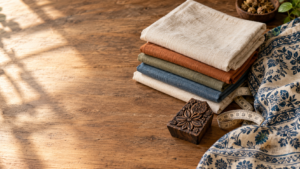
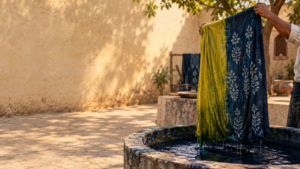
In Bagru, it starts with cotton and a hand-carved teakwood block. Our artisans carve motifs inspired by nature, geometry and local culture, then dip the block in dye and stamp it onto the fabric, one careful press at a time. The dyes are made from earth, plants and minerals, using methods like dabu (mud resist) and indigo. After printing, the cloth is washed and dried in the open Rajasthan sun. Every piece carries tiny variations, and those little differences are what make it handmade.
We use two main routes. Natural dyes such as madder, indigo and turmeric give deep, earthy colours that age gracefully. Pigment printing gives brighter, more consistent colour and is a wonderful place for beginners to start. If you want to go deeper, our team has written about each method:
- What is indigo printing and natural indigo dyeing in Bagru
- Eco printing with leaves and flowers
- Why pigment printing is perfect for beginners
- Syahi Begar, Rajasthan’s black and red printing art
You can find more on our blog, or start from the Anaprinta home page for the full picture of what we do.

Wear It, Shop It or Learn It Yourself
Reading about types of clothes and fabric is good. Holding it is better. Here are two easy ways to get closer to real hand block printed cloth.
Shopping from outside India? Our printed cotton and handcrafted textiles are available on our Etsy shop, shipped worldwide so you can enjoy a piece of Bagru wherever you live. In India, browse the full range on our products page.
Want to try it with your own hands? Join a hand block print workshop at our studio in Bagru, near Jaipur. You will walk through the Fields of Color where printed cloth dries in the sun, learn from master artisans, print your own tote bag, scarf or rug, and sit down to a home-cooked lunch. The one-day session starts at ₹3,000 per person (about $35), and we also run two-day and four-day workshops if you want to go deeper into natural dyeing and resist printing. See every option and book on our workshops page. Questions first? Contact us and we will help you pick the right one.
Follow along on Instagram to see the studio, the blocks and the fabric in real time.

FAQs About Types of Clothes and Fabrics
What are the main types of clothes?
The main types of clothes are casual wear, formal wear, traditional wear, sportswear, loungewear and nightwear, and outerwear. They can also be sorted by who wears them (men, women, kids) or by body part (tops, bottoms, layers).
What are the 10 types of fabric everyone should know?
Cotton, linen, silk, wool, denim, chiffon, polyester, nylon, rayon and velvet cover most of what you will find in everyday and occasion clothing.
What is the difference between fibre and fabric?
Fibre is the raw strand, such as cotton or wool. Fabric is what you get after the fibre is spun into yarn and woven or knitted into cloth.
Which fabric is best for hot weather?
Cotton, linen, voile and khadi breathe well and let sweat evaporate, so they are the most comfortable choices in heat and humidity.
Are natural fabrics better than synthetic ones?
Not always. Natural fabrics like cotton and linen breathe better and feel gentler on skin, while synthetics like polyester and nylon are stronger, dry faster and suit sportswear. Many good garments use a blend.
Final Word
Once you know the types of clothes, the fibres behind them and the way a fabric is woven, shopping stops being a guessing game. You read the label, you feel the cloth, and you know what you are paying for.
If this guide helped, take the next step today: browse our printed cotton on Etsy, or book a day at the studio through our workshops page. Either way, you will be holding a piece of Bagru’s craft, made by hands that have been doing this for five generations.